


 Nuskha Maa
−
×
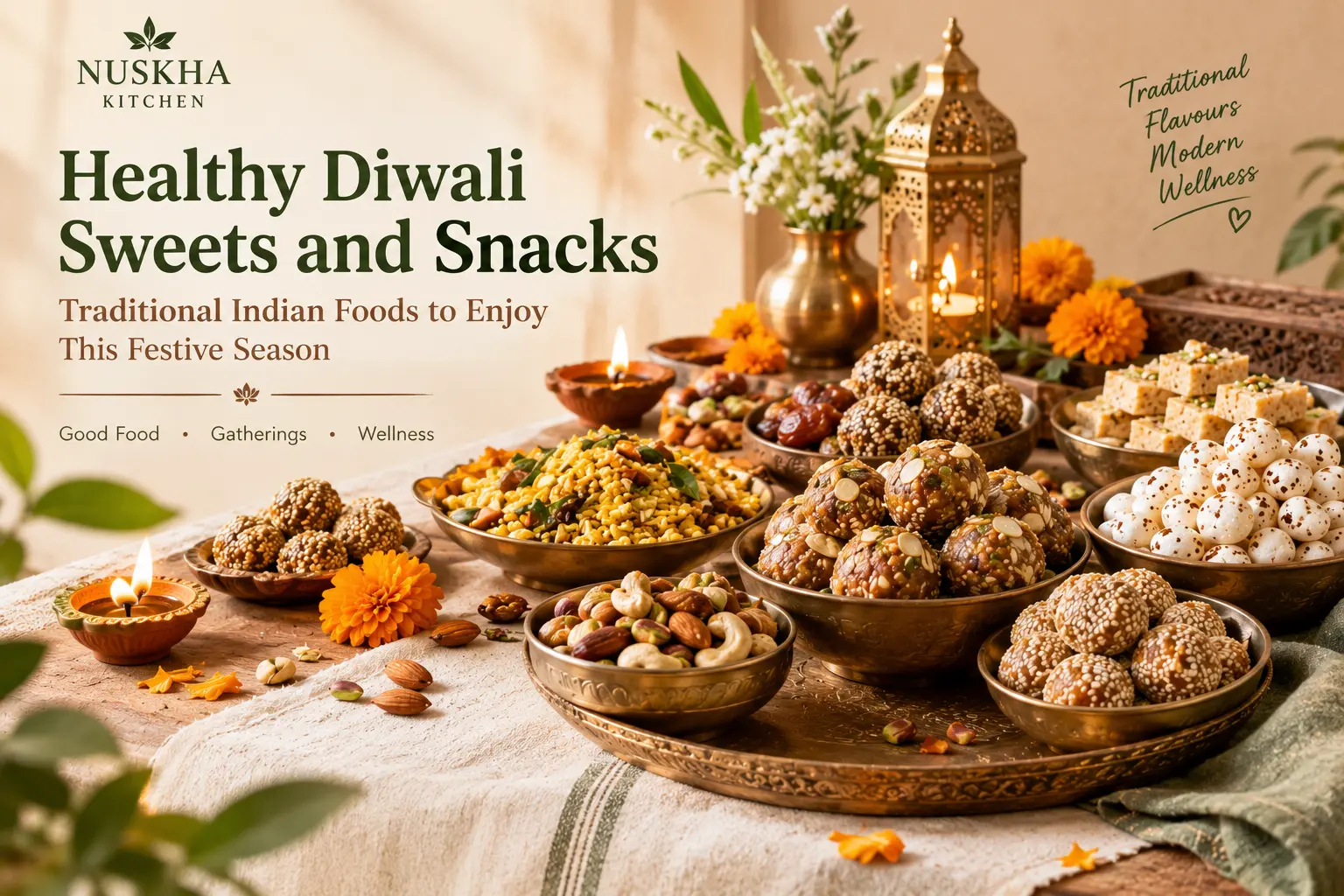
Diwali is a time for family gatherings, festive meals and traditional Indian sweets. From laddoos and dry fruits to namkeen and homemade snacks, food is an important part of the celebrations. As the festive season arrives alongside the cooler months, many people also look for traditional foods that fit into their everyday winter diet.
But are traditional Indian sweets and snacks healthy? Which ingredients should you look for, and how can you enjoy festive foods as part of a balanced diet?
The answer depends on the ingredients, preparation method and portion size. Traditional foods made with nuts, seeds, whole grains and pulses can provide valuable nutrients, while sweets made with ghee, jaggery or sugar can still be energy-dense. Understanding these differences can help you make informed food choices this Diwali.
In this guide, we explore traditional Indian Diwali foods, their nutritional value and practical ways to enjoy them during the festive season.
Indian festive cooking often includes ingredients such as sesame seeds, jaggery, dry fruits, ghee, whole grains and pulses. These ingredients are used in different regional recipes, including laddoos, chikkis, panjiri and other homemade treats.
Many of these foods are also popular during winter because they are convenient, flavourful and energy-dense. Nuts and seeds provide unsaturated fats and minerals, pulses provide protein and fibre, and whole grains contribute carbohydrates and other nutrients.
However, no single food is essential for winter health. A varied diet containing vegetables, fruits, protein-rich foods, whole grains and suitable fats remains important throughout the year.
1. Gond Laddu
Gond laddoo is a traditional Indian sweet prepared using edible gum, ghee, flour and ingredients such as nuts or jaggery, depending on the recipe.
Edible gum is used in several regional traditional preparations. The nutritional value of gond laddoo depends on its ingredients and proportions. Ghee and nuts contribute fats and energy, while nuts may also provide protein, fibre and minerals.
Gond laddoos can be enjoyed as part of a varied diet, but they are generally energy-dense. Choose a suitable portion according to your dietary needs.
At Nuskha Kitchen, gond laddoo is one of the traditional foods associated with our range. If you are exploring traditional Indian sweets this festive season, check the product ingredients and serving guidance before choosing.
2. Til-Gud Laddoo
Til-gud laddoos are made using sesame seeds and jaggery. They are popular in several Indian festive and winter food traditions.
Sesame seeds contain unsaturated fats, protein, fibre and minerals, including calcium and iron. Jaggery provides sweetness, but it is still a source of added sugar.
You can enjoy til-gud laddoos in moderation while including other nutritious foods in your daily meals. Their nutritional value will vary depending on the sesame-to-jaggery ratio and the size of each laddoo.
3. Dry Fruits and Nuts
Almonds, walnuts, cashews and pistachios are frequently served to guests during Diwali. They offer a combination of unsaturated fats, plant protein, fibre and different micronutrients.
A small bowl of mixed nuts can be served alongside other festive snacks. Unsalted varieties are useful for people who want to keep their sodium intake lower.
Although dry fruits and nuts are nutrient-rich, they can also be high in calories. Portion size matters, particularly when they are served alongside several other festive foods.
4. Makhana
Makhana, also known as fox nuts, is a popular ingredient in Indian snack preparations. It can be roasted with a small amount of ghee and mild spices for a crunchy snack.
Roasted makhana offers an alternative to some deep-fried snacks. Its nutritional profile depends on the preparation method and the quantity of oil, ghee and salt added.
For a simple homemade version, roast makhana in a pan and season it with cumin powder or black pepper.
5. Besan Laddoo
Besan laddoo is prepared using gram flour, ghee and sugar, with cardamom or nuts added in some recipes.
Gram flour provides plant protein and some fibre. However, the finished sweet also contains added sugar and fat, so it is best enjoyed in an appropriate portion.
Traditional sweets do not need to be completely avoided during Diwali. Instead, focus on enjoying your favourites mindfully and maintaining variety in your overall diet.
6. Homemade Dry Fruit Laddoo
Dry fruit laddoos can be prepared using dates, almonds, cashews, walnuts, seeds and other ingredients. Some recipes use no additional sugar, while others include jaggery or other sweeteners.
Dates contain naturally occurring sugars, and nuts and seeds contribute fats and other nutrients. A laddoo made without added sugar is not necessarily sugar-free or low in calories.
If you are preparing homemade laddoos, choose ingredients according to your preferences and check the recipe for added sweeteners.
7. Multigrain and Millet-Based Snacks
Millets such as ragi, along with other whole grains, can be included in a varied diet. Depending on the recipe, they may contribute fibre, minerals and complex carbohydrates.
Traditional and contemporary Indian recipes use these grains in laddoos, chillas, savoury snacks and other preparations.
For festive snacks, look at the complete ingredient list rather than judging a product only by the words “multigrain” or “millet.” The amount of added sugar, salt and fat also affects the final nutritional profile.
Choosing healthier festive foods does not mean avoiding every traditional sweet. A few practical steps can help you make informed decisions.
Check the ingredients. Look for the main ingredients and note the amount of added sugar, ghee or other fats where this information is available.
Pay attention to portions. A small serving of a favourite sweet can fit into an overall balanced eating pattern.
Include variety. Enjoy different foods rather than relying entirely on sweets and namkeen throughout the day.
Choose preparation methods thoughtfully. Roasted or baked snacks may require less oil than deep-fried alternatives, depending on the recipe.
Be mindful of packaged foods. Check nutrition labels, allergen information, freshness and storage instructions.
Avoid unnecessary food restrictions. You do not need to skip meals to make room for sweets. Regular, balanced meals can help you manage hunger during festive gatherings.
Diwali often falls around the beginning of cooler weather in many parts of India. It can be a useful time to review your everyday food habits, especially as seasonal vegetables and fruits change.
Sesame Seeds and Nuts
Sesame seeds and nuts can contribute unsaturated fats, protein, fibre and minerals. They can be added to homemade snacks, chutneys, breakfast dishes or other meals.
Whole Grains and Millets
Whole grains and millets can contribute carbohydrates, fibre and other nutrients. Try including a variety of grains rather than relying on only one type.
Pulses and Legumes
Dal, chickpeas, rajma and other pulses provide plant-based protein and fibre. They can form part of everyday meals alongside grains and vegetables.
Seasonal Fruits and Vegetables
Include a variety of fruits and vegetables in your meals. Different colours and types provide different vitamins, minerals and other beneficial plant compounds.
Dairy Foods and Alternatives
Milk, curd, paneer and suitable fortified alternatives can contribute protein and calcium. Choose options according to your dietary preferences and nutritional needs.
Remember that winter nutrition is not about eating only “warming” foods. A balanced diet, adequate hydration, physical activity and sufficient sleep all contribute to overall well-being.
Gond laddoo is a traditional food, but whether it suits your daily diet depends on its ingredients, portion size and individual nutritional needs.
Because laddoos often contain ghee, flour, nuts and sweeteners, they can be energy-dense. Some people may prefer smaller portions or less frequent servings depending on their overall diet.
People managing diabetes, food allergies or other health conditions should consider the complete ingredient list and seek individualised dietary advice when needed.
It is also important not to assume that eating gond laddoo prevents illness, treats a medical condition or guarantees a particular health outcome. It is a traditional food, not a substitute for medical care.
Here are some simple ways to enjoy the festive season while maintaining balanced eating habits:
Start the day with a regular breakfast rather than skipping meals.
Include protein-rich foods such as dal, beans, curd, paneer, eggs or suitable alternatives.
Keep fruit, nuts or homemade snacks available between meals.
Enjoy your favourite mithai in a comfortable portion.
Drink water regularly throughout the day.
Store sweets and perishable snacks according to food-safety instructions.
Return to your usual routine after celebrations rather than following restrictive diets.
These habits can make festive eating more manageable without taking away from the enjoyment of Diwali.
Healthy Diwali eating is not about replacing every traditional sweet with a so-called diet food. It is about understanding ingredients, enjoying appropriate portions and making room for a variety of nutritious foods.
Traditional Indian foods such as gond laddoo, til-gud laddoo, dry fruits, roasted makhana and millet-based snacks can all be part of festive celebrations, depending on their preparation and your individual dietary needs.
As winter approaches, focus on a varied diet that includes fruits, vegetables, whole grains, pulses, nuts and other suitable protein sources. Enjoy your favourite festive foods mindfully and let tradition remain a joyful part of your celebrations.