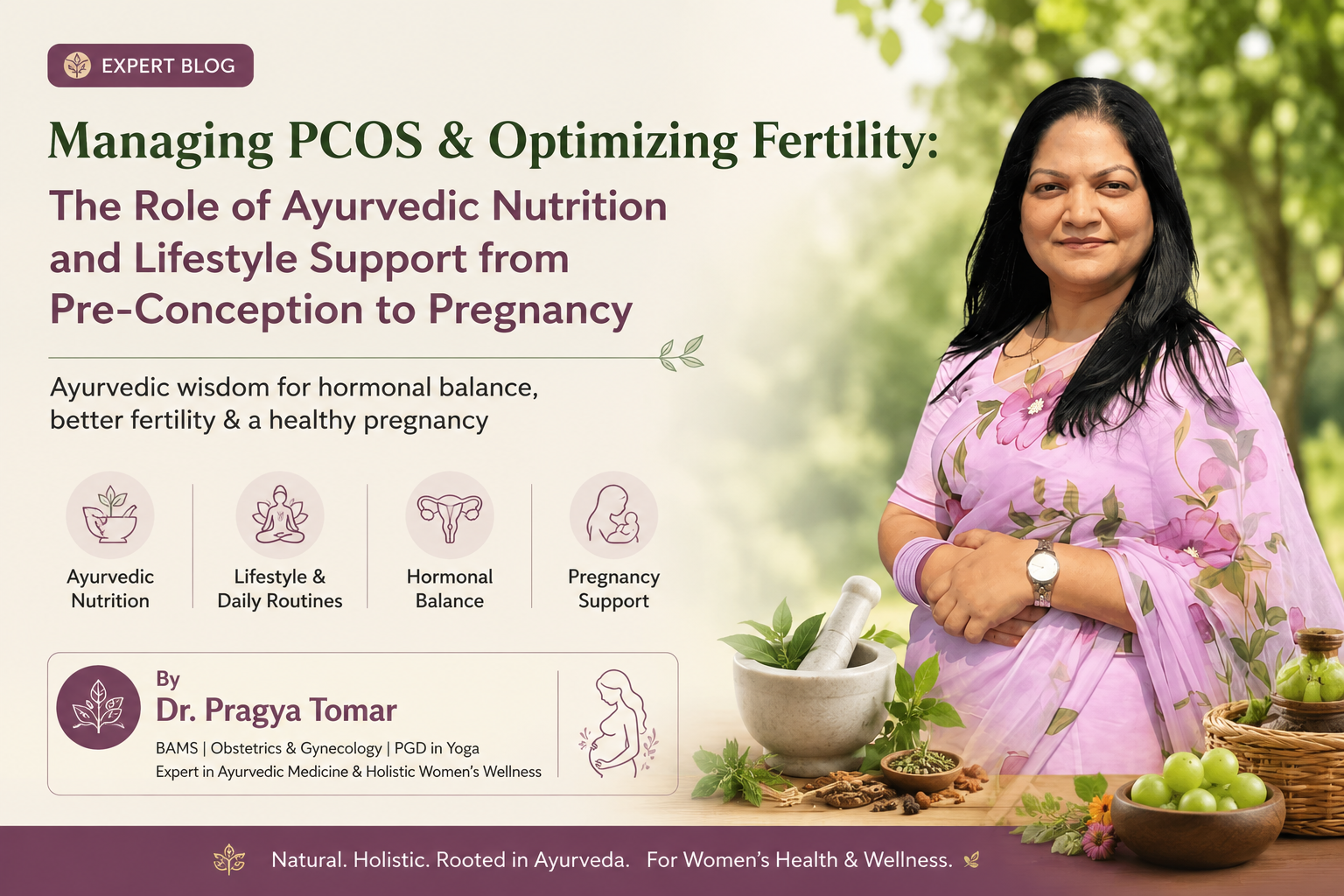
Polycystic Ovary Syndrome (PCOS) has evolved from a clinical rarity into one of the most prevalent metabolic and endocrine disruptions affecting women of reproductive age worldwide. Statistically impacting an estimated 8% to 13% of women globally, it manifests differently in every individual, presenting a complex web of irregular periods, unwanted weight gain, stubborn acne, thinning hair, and insulin imbalances. For those who are looking toward the horizon of family planning and maternal joy, receiving a diagnosis of PCOS can feel incredibly disheartening, often accompanied by an immediate cloud of anxiety surrounding fertility and the capacity to sustain a healthy pregnancy.
In conventional modern diagnostic paradigms, management strategies frequently gravitate toward symptom management via synthetic hormonal birth control pills, insulin sensitizers, or aggressive assistive reproductive technologies. While these options have their place, they often serve as temporary patches rather than sustainable systemic solutions. In contrast, the timeless medical science of Ayurveda approaches the female body not as a collection of isolated organs to be pharmacologically manipulated, but as a completely unified, intelligent ecosystem governed by natural rhythms.
From the Ayurvedic perspective, PCOS is fundamentally classified as an Artava Dushti (disruption of the female reproductive tissues and channels) secondary to profound metabolic errors. It is viewed as an invitation to realign the body's primary biological energies. The ancient text of Charaka Samhita reminds us that true wellness is restored when we identify the root causes of systemic imbalance and rectify them using tailored dietary habits (Ahara), intentional daily lifestyle protocols (Vihara), and targeted botanical intelligence. This clinical masterclass outlines how you can address PCOS at its roots, optimize your reproductive tissues during the critical pre-conception window, and safely transition into a radiant, fully sustained pregnancy.
1. The Complex Etiology: The Ayurvedic Perspective on PCOS
To understand how Ayurveda remedies PCOS, we must understand its multi-dosha manifestation. No single dosha operates in a vacuum when a disorder as systemic as PCOS occurs. Instead, it represents a deep-seated dance of disharmony involving all three primary energetic pillars—Kapha, Vata, and Pitta—with a distinct accentuation on Kapha-Vata stagnation.
The Role of Kapha (Stagnation & Structure): Kapha dosha is comprised of the earth and water elements, providing structure, stability, and lubrication to our physical body. When Kapha becomes excessively elevated due to a heavy, cold, or overly sweet diet, it leads to a slowdown in cellular intelligence. In the context of the reproductive system, high Kapha generates structural density and fluid retention, manifesting directly as the collection of multiple immature follicles in the ovaries—popularly called cysts. This is the physiological physical expression of metabolic stagnation.
The Role of Vata (Movement & Disruption): Vata dosha, governed by air and space, rules all movement and neurological impulses within the human frame. A specialized sub-dosha known as Apana Vayu governs the downward-moving energy responsible for elimination, menstruation, ovulation, and childbirth. When high stress, lack of sleep, or erratic schedules disrupt Vata, Apana Vayu becomes vitiated or blocked. It loses its directional consistency, leading to irregular ovulation, erratic cycles, anovulatory patterns, and intense menstrual cramping.
The Role of Pitta (Metabolic Fire & Inflammation): Though less pronounced in standard presentations, Pitta dosha (fire and water) becomes compromised when metabolic errors persist. Vitiated Pitta leads to systemic, low-grade tissue inflammation, manifesting outwardly as painful cystic acne, male-pattern hair thinning (hirsutism), and metabolic hyperandrogenism (excess testosterone production).
When these three compromised energies accumulate, they systematically target the Artava Vaha Srotas—the subtle channels carrying the menstrual fluid and the ovum—as well as the Shukra Dhatu (the deep reproductive tissue layer). The metabolic channels become congested with a heavy, sticky byproduct known as Ama (undigested metabolic sludge). When Ama wraps around your cells, cellular reception slows down, mirroring what modern science terms 'insulin resistance.' Consequently, the ovaries are starved of clean, vibrantly circulating nutrients, causing egg quality to decline and menstrual health to stall. To reverse this, we must deliberately clear structural blockages, revitalize cellular intelligence, and build premium-tier tissue.
2. Pre-Conception Care: Preparing the Soil (Kshetra) and Seed (Beeja)
In traditional Ayurvedic obstetrics and gynecology, conception is described through a timeless agrarian agricultural analogy. For a premium, healthy harvest, four fundamental parameters must align perfectly: the Kshetra (the field or the womb), the Beeja (the seed, representing both the ovum and spermatozoa), the Ritu (the right season or hormonal window), and the Ambu (the liquid nourishment and plasma flow). Pre-conception care—traditionally known as Garbhadhana Samskara—focuses completely on building and refining these fields before a single step toward conception is taken.
When a woman with PCOS desires to conceive, rushing into pregnancy without clearing the systemic fields can often lead to recurrent early miscarriages, high gestational distress, or poor fetal nourishment. Therefore, we emphasize a dedicated 3-to-6-month window focused heavily on deep detoxification and tissue restoration.
Kindling Agni to Dissolve Ama
Your digestive fire, or Agni, is the supreme engine of your health. When Agni is low, even the healthiest food transforms into toxic buildup (Ama) rather than vital reproductive energy (Ojas). To systematically kindle your metabolic fire and clear the insulin-resistant pathways, implement these practices:
Sip Warm Herbal Water: Drink water boiled gently with cumin seeds, fennel seeds, and a thin slice of fresh ginger continuously throughout the day. This simple concoction acts as a gentle, non-invasive daily scrape (Lekhana) for cellular channels, clearing away accumulated congestion.
Eliminate Iced Interventions: Completely eliminate iced beverages, raw uncooked salads, frozen desserts, and deeply fried items from your menu. These options shock your digestive lining, immediately extinguishing your internal fire and exacerbating both Kapha and Vata stagnation.
Honor the Sun Clock: Consume your largest, most nourishing meal between 12:00 PM and 1:30 PM, when the external sun is highest and your corresponding digestive Agni is at its peak capacity. Keep dinners incredibly light, warm, and easily soup-based, consuming them before 7:30 PM.
The Ahara Protocol: Pure Therapeutic Nutrition
Nutritional therapy for PCOS must be profoundly nourishing yet anti-stagnant. Your cells require highly pure, clean, unprocessed building blocks to repair the delicate lining of the ovaries and the uterus.
Prioritize Ancient, Light Grains: Swap modern processed wheat for complex, ancient options like quinoa, amaranth, finger millet (Ragi), and unpolished red or brown rice. These grains have a lower glycemic impact, helping stabilize blood sugar levels naturally while avoiding excess Kapha formation.
Embrace Bitter and Astringent Cleaners: Incorporate generous portions of cooked vegetables such as bitter gourd (Karela), ash gourd, pointed gourd, celery, fenugreek leaves, and dark leafy greens. These specific tastes help purify the blood, support optimal liver detoxification, and clear out excess, stagnant hormones.
Integrate Intelligent Fats: Do not fear fats; fear processed oils. Pure, traditional A2 cow's ghee is an exceptional asset for PCOS fertility. Ghee possesses a unique biochemical capability to traverse cellular membranes and acts as a premium carrier (Anupana) to deliver core nutrients directly into your deep reproductive tissues, supporting optimal hormone synthesis.
Expert Clinical Recommendation for Pre-Conception Support:
While adjusting your daily diet lays the groundwork, the deep tissue corrections required to reverse chronic ovarian stagnation often require advanced botanical intelligence. For this specific purpose, integrating a dedicated restorative formulation like Nari Kalyaan Paak provides profound, deep-seated systemic support. This time-honored blend is meticulously crafted to directly address the Artava Vaha Srotas, gently regulating hormonal fluctuations, assisting in the natural regularization of the menstrual cycle, and supplying key trace nutrients that strengthen the uterine lining. By removing metabolic congestion and boosting egg vitality, it effectively helps ready the body for a natural, successful conception.
3. Lifestyle Support (Vihara) to Achieve True Hormonal Sync
In our modern world, we often separate metabolic issues from nervous system health. Ayurveda never makes this separation. Chronic stress, continuous digital overstimulation, and highly erratic daily patterns trigger a massive overproduction of cortisol and adrenaline. When cortisol remains elevated, it creates an immediate hormonal cascade that suppresses progesterone—the critical hormone required to sustain regular ovulation and maintain early pregnancy. Therefore, structural adjustments to your lifestyle (Vihara) are just as vital as your dietary modifications.
|
Lifestyle Routine Pillar |
Direct Physiological Benefit for PCOS |
Daily Implementation Practice |
|
Dinacharya |
Directly synchronizes the circadian rhythm, stabilizes cortisol cascades, and calms erratic Vata dosha, allowing natural LH/FSH surges to take place. |
Wake up before sunrise (by 6:00 AM) to capitalize on early morning clarity. Maintain identical times for meals daily. Ensure your screens are off by 9:00 PM, and you are in bed sleeping by 10:00 PM. |
|
Abhyanga |
Calms the sympathetic nervous system, dramatically drops system cortisol, stimulates lymphatic drainage, and actively moves pelvic stagnation. |
Spend 10 to 15 minutes prior to your morning bath massaging warm, cured black sesame oil over your entire body, using circular strokes over joints and gentle clockwise strokes over the lower abdomen. |
|
Yogasana & |
Mechanically enhances arterial blood flow and oxygenation to the pelvic bowl, stretches the ovaries, and lowers baseline insulin resistance. |
Dedicate 30 minutes daily to supportive postures: Butterfly Pose (Badhakonasana), Cobra Pose (Bhujangasana), and Supported Bridge Pose. Pair this with 10 minutes of Nadi Shodhana (Alternate Nostril Breathing) to soothe the mind. |
4. Seamless Transition: Protecting and Nourishing Pregnancy
Achieving a positive pregnancy test is an incredible, joyful milestone on this journey—but for an individual managing a history of PCOS, it represents a crucial point of transition. In Ayurvedic gynecology, the foundational clinical goals shift overnight from purification, cleansing, and stimulation to deep stabilization, calming, and profound tissue building. Because the early hormonal environment of a PCOS body can sometimes be prone to luteal phase deficiencies or erratic progesterone shifts, the first 90 days require protective care.
During this vital phase, all cleansing protocols and stimulating herbs are put aside. The body now needs grounding, cooling, and stabilizing elements to support the growing embryo. This is the time to prioritize rest, reduce unnecessary travel, and choose deeply grounding, sweet, and stabilizing foods like whole milk, soaked almonds, rice puddings, and well-cooked squashes.
As your pregnancy advances into the second and third trimesters, the maternal body undergoes a profound morphological expansion, requiring precise, systematic support tailored to each specific month of development. To match these changing needs, transitioning your self-care routine to curated, time-tested support ranges like the Nuskha Pregnancy Care Collection is a magnificent step. This collection is purposefully formulated to provide expectant mothers with the exact traditional, nutrient-dense natural supplements required to cultivate maternal strength, prevent late-stage gestational fatigue, and provide foundational nourishment that supports your baby's optimal natural development.
Concluding Insights from Dr. Pragya
A diagnosis of PCOS should never be viewed as a final roadblock or a defining limitation on your path to motherhood. Instead, look at it as a profound, intuitive signal from your body—a message asking you to slow down, clear out internal clutter, and consciously return to the gentle rhythms of the natural world. By honoring your unique constitution, clearing cellular blockages with targeted nourishment, and adopting traditional Ayurvedic principles, you possess the power to reclaim your hormonal vitality and foster fertility with grace and confidence.
Because every woman's individual metabolic blueprint (Prakriti) is entirely unique, your wellness journey should be treated with the personalization, care, and kindness it truly deserves. Trust in your body's innate wisdom, support it with time-tested tools, and enjoy the beautiful transition into maternal health.
For daily wellness wisdom and authentic traditional insights, follow our growing community on Instagram at @nuskha_care or explore our full suite of traditional wellness formulations on the official Nuskha Kitchen Website.
Written by:
Dr. Pragya Tomar (BAMS)
Obstetrics & Gynecology | PGD in Yoga
Expert in Ayurvedic Medicine & Holistic Women’s Wellness
Spandan Hospital, Baraut, District Baghpat
Instagram: @dr.pragyawellness