


 Nuskha Maa
−
×
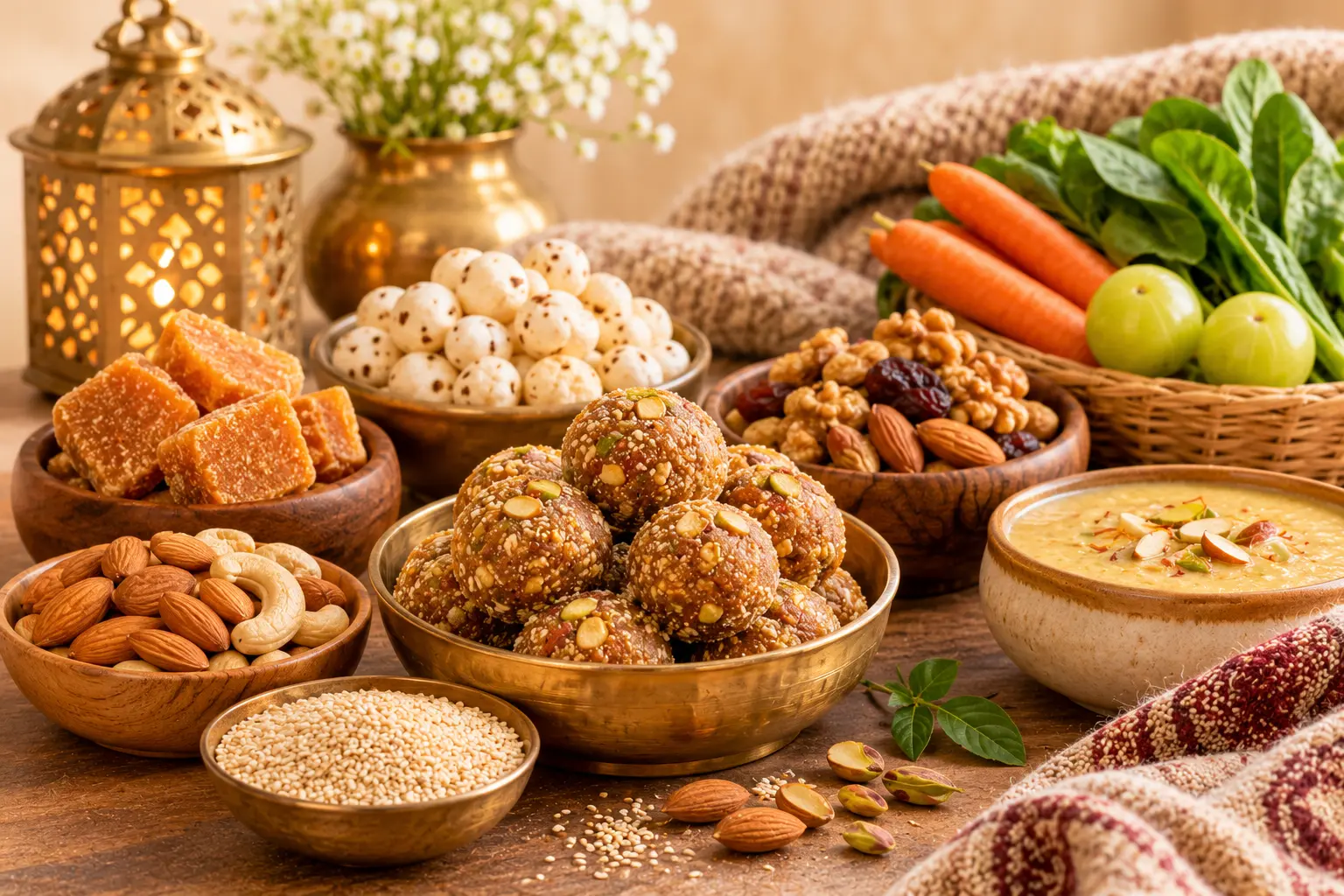
As winter approaches, our food preferences naturally begin to change. Warm meals, homemade laddoos, dry fruits, soups and traditional Indian foods become a regular part of many households. Seasonal vegetables and fruits also bring variety to our everyday meals.
But have you ever wondered which foods are actually good to include in your winter diet? Are gond, til, jaggery and dry fruits beneficial during colder months? And how can you plan a balanced winter diet using everyday Indian ingredients?
A healthy winter diet does not require expensive foods or complicated recipes. A combination of seasonal produce, whole grains, pulses, nuts, seeds and adequate protein can help you meet your nutritional needs.
Let's explore the best foods to eat in winter and how to include them in your daily routine.
During winter, people may spend more time indoors, change their physical activity routines and prefer heavier or warmer meals. These seasonal changes can also affect everyday eating habits.
Maintaining a balanced diet is important throughout the year. During colder months, including a variety of nutrient-rich foods can help you meet your daily requirements for protein, fibre, vitamins, minerals and healthy fats.
Your winter diet should include:
Seasonal fruits and vegetables
Protein-rich foods such as dal, beans, paneer and eggs
Whole grains and millets
Nuts and seeds
Dairy foods or suitable alternatives
Adequate water and other fluids
1. Gond Laddoo
Gond laddoo is a traditional Indian sweet commonly prepared using edible gum, ghee, flour, nuts and sweeteners such as jaggery or sugar, depending on the recipe.
It is popular in several Indian households during winter and is often included in traditional food preparations.
Nuts contribute protein, fibre and unsaturated fats, while ghee and sweeteners add energy. The nutritional value of gond laddoo depends on its ingredients and preparation.
You can include it as an occasional part of your winter diet, keeping portion size in mind because traditional laddoos can be energy-dense.
2. Sesame Seeds (Til)
Sesame seeds are widely used in Indian winter recipes such as til-gud laddoo, chikki and homemade snacks.
They contain:
Calcium
Iron
Magnesium
Protein
Fibre
Unsaturated fats
You can add sesame seeds to chutneys, salads, rotis and homemade snacks. They are also a useful ingredient for adding texture and flavour to everyday meals.
3. Jaggery (Gud)
Jaggery is a traditional sweetener used in many Indian winter preparations. It is commonly combined with sesame seeds, peanuts and other ingredients.
Although jaggery may contain small amounts of minerals, it is still a source of added sugar. It should not be considered a sugar-free or unlimited alternative to regular sugar.
Enjoy jaggery-based sweets in moderate portions as part of a balanced diet.
4. Dry Fruits and Nuts
Almonds, walnuts, cashews, pistachios and raisins are popular winter foods in India.
Different nuts provide different nutrients:
Almonds contain vitamin E, fibre and unsaturated fats.
Walnuts provide plant-based omega-3 fatty acids.
Cashews contain minerals such as magnesium and copper.
Pistachios provide protein and fibre.
Raisins contain carbohydrates and naturally occurring sugars.
You can enjoy a small serving of mixed nuts as a snack or add them to porridge, milk, homemade laddoos and breakfast dishes.
5. Amla (Indian Gooseberry)
Amla is a seasonal fruit commonly available during winter in many parts of India. It is known for its vitamin C content.
Vitamin C contributes to normal immune function and supports collagen formation and iron absorption.
Amla can be consumed in different forms:
Fresh amla
Amla chutney
Amla juice
Homemade amla preparations
Choose preparations according to your dietary preferences and check the added sugar and salt content in packaged products.
6. Green Leafy Vegetables
Winter brings several seasonal leafy vegetables, including spinach, mustard greens, fenugreek leaves and bathua.
These vegetables contribute nutrients such as folate, vitamin K, vitamin C, fibre and minerals.
Some simple ways to include them are:
Palak dal
Sarson ka saag
Methi paratha
Bathua raita
Mixed green vegetable sabzi
Try including different green vegetables throughout the week instead of relying on just one variety.
7. Carrots
Carrots are widely used in Indian winter meals and are a source of beta-carotene, which the body can convert into vitamin A.
Vitamin A plays an important role in normal vision and immune function.
You can enjoy carrots as:
Fresh carrot salad
Gajar-matar sabzi
Carrot soup
Vegetable pulao
Homemade gajar halwa
Gajar halwa can be part of a festive meal too, but its sugar and ghee content should be considered.
8. Sweet Potatoes (Shakarkandi)
Sweet potatoes are a versatile winter food that provide carbohydrates, fibre and beta-carotene.
They can be boiled, roasted or added to homemade chaat and vegetable dishes.
Roasted shakarkandi with lemon and mild spices is a simple seasonal snack. It can also be included in a balanced lunch or dinner.
9. Millets and Whole Grains
Millets such as ragi, bajra and jowar are traditional grains used in different parts of India.
They provide carbohydrates, fibre and varying amounts of protein and minerals, depending on the grain.
Some ways to include them in your winter diet are:
Bajra roti
Ragi porridge
Jowar roti
Millet khichdi
Homemade millet laddoos
You can combine these grains with dal, curd, vegetables or other protein sources to make your meals more balanced.
10. Pulses and Legumes
Dal, chickpeas, rajma, lobia and moong are important sources of plant-based protein and fibre.
Including pulses regularly can help add variety to your diet and support your daily protein intake.
Try different preparations such as:
Moong dal khichdi
Chana curry
Rajma with rice
Mixed dal
Sprouted moong salad
Combining pulses with grains and vegetables can make everyday meals more varied and satisfying.
Indian food traditions include several preparations that use ingredients commonly found in winter kitchens.
Til-Gud Laddoo
Made with sesame seeds and jaggery, til-gud laddoo is popular in many regions of India. Sesame seeds contribute minerals, fibre and unsaturated fats, while jaggery adds sweetness.
Methi Laddoo
Methi laddoo is a traditional preparation made using fenugreek seeds or fenugreek powder, flour, ghee and sweeteners. Recipes vary between households.
Its nutritional profile depends on the ingredients and quantities used. Fenugreek can also interact with certain medicines, so concentrated preparations or supplements should be discussed with a healthcare professional when relevant.
Panjiri
Panjiri is a traditional preparation that may include whole-wheat flour, ghee, nuts, seeds and sweeteners. It is enjoyed in different forms across Indian households.
Because it can be energy-dense, portion size and individual dietary needs should be considered.
Dry Fruit Laddoo
Dry fruit laddoos may contain almonds, cashews, walnuts, dates, seeds and other ingredients.
They can provide a combination of fats, carbohydrates, fibre and some protein. However, even laddoos made without added sugar can be calorie-dense due to their ingredients.
Traditional foods can add variety to your winter diet, but no single preparation is necessary for good health.
People sometimes drink less water during colder weather because they feel less thirsty. However, hydration remains important throughout the year.
Here are some options to include in your routine:
Plain water
Warm water
Milk, if suitable for your diet
Homemade vegetable soup
Unsweetened herbal infusions
Buttermilk, depending on personal preference
Tea and coffee can also contribute to fluid intake, but keep added sugar moderate and be mindful of caffeine consumption.
There is no need to completely avoid your favourite winter foods. However, it can help to be mindful of how frequently you consume certain foods.
Excessively sugary sweets: Laddoos, halwa and chikki can contain considerable amounts of added sugar.
Deep-fried snacks: Pakoras and fried namkeen may add significant amounts of fat and calories, particularly when eaten frequently.
Highly salted packaged foods: Some packaged snacks contain high levels of sodium. Check nutrition labels before choosing them regularly.
Sugary beverages: Sweetened tea, coffee and packaged drinks can contribute additional sugar to your diet.
The goal is not to stop enjoying traditional food but to maintain variety and moderation.
Here is an example of a balanced Indian winter food routine.
Breakfast: Vegetable poha, besan chilla or ragi porridge with a suitable protein source.
Mid-morning: Amla, orange, guava or another seasonal fruit.
Lunch: Bajra or whole-wheat roti, dal, seasonal vegetable sabzi and curd.
Evening snack: A small portion of dry fruits, roasted chana or homemade gond laddoo.
Dinner: Vegetable khichdi, dal with roti or a meal containing vegetables and a protein source.
Hydration: Drink water regularly throughout the day, according to your needs.
This is a sample routine, not a fixed diet plan. Food choices and quantities should be adjusted according to individual nutritional requirements, activity levels and health conditions.
Myth 1: You must eat only hot foods during winter.
Your body needs a variety of nutrients throughout the year. Fruits, salads and other foods do not need to be avoided simply because the weather is cold.
Myth 2: Jaggery is healthier than sugar in unlimited quantities.
Jaggery is still a source of sugar. Its quantity matters, just like other sweeteners.
Myth 3: Eating more ghee keeps everyone healthy during winter.
Ghee can be included in a balanced diet, but it is a source of saturated fat and should be consumed in appropriate quantities.
Myth 4: Dry fruits can be eaten without portion control.
Nuts and dried fruits provide useful nutrients, but they can also be energy-dense. A suitable serving is important.
Myth 5: Traditional winter foods can prevent seasonal illnesses.
Traditional foods can contribute nutrients to your diet, but no individual food guarantees protection from infections or replaces appropriate medical care.
Winter is a wonderful time to enjoy seasonal fruits, vegetables and traditional Indian foods. Ingredients such as gond, sesame seeds, jaggery, dry fruits, millets and pulses can add variety and nutrients to everyday meals.
Instead of depending on one particular food, focus on a balanced diet that includes different food groups. Enjoy traditional laddoos and homemade winter preparations in suitable portions, stay hydrated and maintain regular eating habits.
A thoughtful winter diet is not about following complicated rules. It is about making everyday food choices that are varied, nourishing and enjoyable.