


 Nuskha Maa
−
×
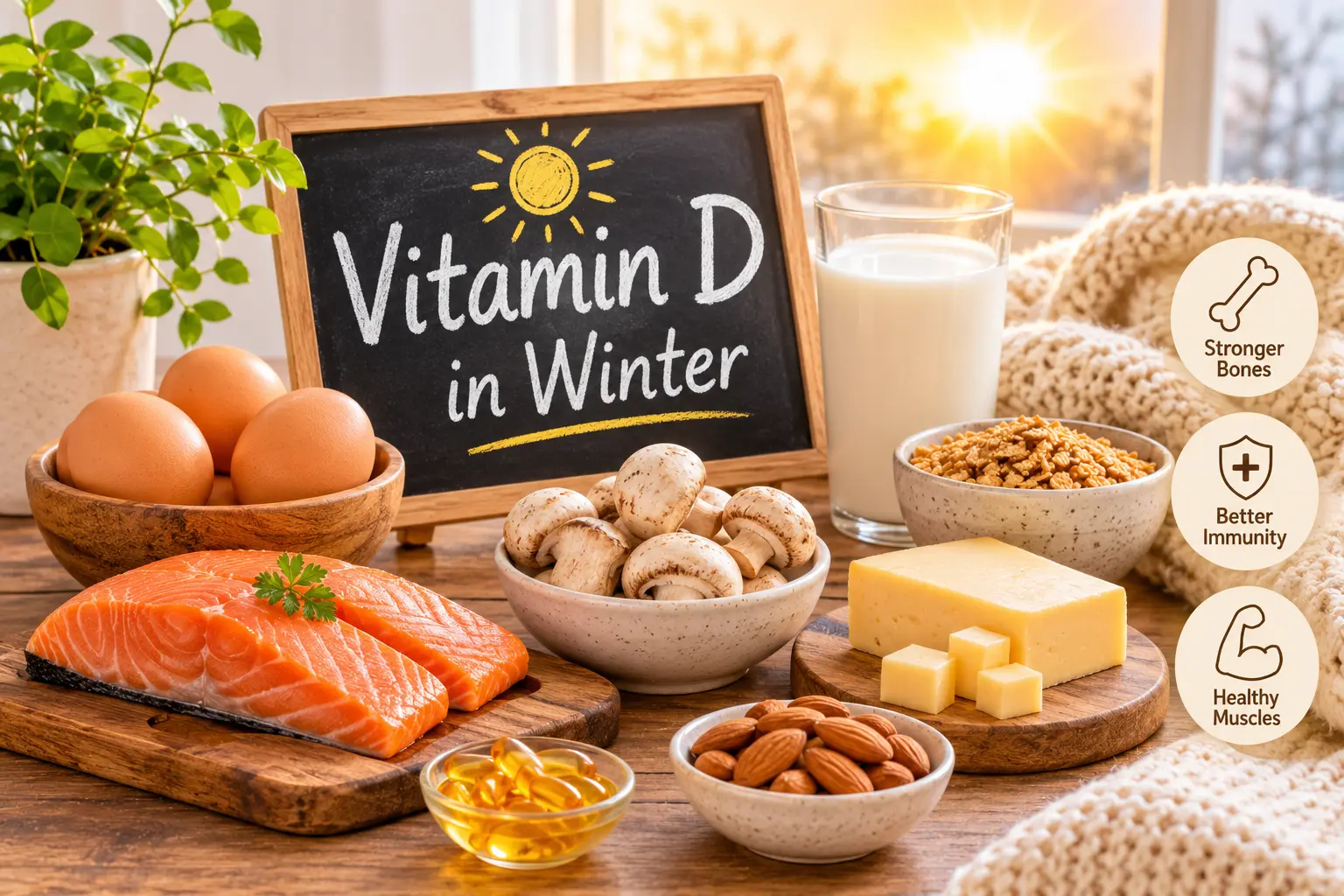
Vitamin D is an important nutrient that helps the body absorb calcium and maintain healthy bones and teeth. It also plays a role in normal muscle function and immune system functioning.
During winter, many people spend less time outdoors because of colder weather and shorter days. This may affect the amount of vitamin D the body produces through sunlight.
But can sunlight alone fulfil your vitamin D requirements? Which foods contain vitamin D? And when should you consider getting your vitamin D levels checked?
In this blog, we will explore vitamin D in winter, its dietary sources, sunlight exposure and practical ways to maintain healthy vitamin D levels.
Vitamin D performs several important functions in the body.
1. Supports Bone Health
Vitamin D helps the body absorb calcium from food. Calcium and vitamin D work together to support normal bone development and maintenance.
2. Helps Maintain Muscle Function
Vitamin D contributes to normal muscle function. Adequate levels are important for overall physical health.
3. Supports Immune Function
Vitamin D plays a role in normal immune system functioning. However, taking extra vitamin D does not guarantee protection from infections.
4. Supports Calcium Absorption
Without adequate vitamin D, the body may have difficulty absorbing calcium efficiently, which can affect bone health over time.
The body produces vitamin D when skin is exposed to UVB radiation from sunlight.
During winter, vitamin D production may be affected by:
Spending less time outdoors
Covering most of the skin with clothing
Limited sunlight exposure
Living in areas with seasonal changes in sunlight
Having darker skin, which may require longer UVB exposure for vitamin D production
Certain health conditions that affect vitamin D absorption
However, vitamin D deficiency can occur during any season. It is not limited to winter.
Food alone may not always provide enough vitamin D, but including vitamin D sources in your diet can help.
1. Fatty Fish
Fatty fish such as salmon, sardines and trout can provide vitamin D.
The amount varies depending on the type of fish and preparation method.
2. Egg Yolks
Egg yolks contain small amounts of vitamin D. The amount can vary depending on the hen's diet.
Eggs can be included in a balanced diet if they suit your dietary preferences.
3. Fortified Milk
Some milk products are fortified with vitamin D.
Check the nutrition label to confirm whether vitamin D has been added and how much is present.
4. Fortified Plant-Based Milk
Some soy, almond or other plant-based milk alternatives contain added vitamin D.
Choose fortified products and check the nutrition information because not every plant-based drink contains vitamin D.
5. Fortified Cereals and Other Foods
Some breakfast cereals and other foods may be fortified with vitamin D.
Always check the label to confirm the nutrient content.
Sunlight can help the body produce vitamin D, but the amount produced depends on several factors.
These include:
Time of day
Season and geographical location
Cloud cover and air pollution
Skin pigmentation
Age
Clothing and sunscreen use
There is no single sunlight duration that works for everyone.
Sun exposure should also be balanced with skin protection. Avoid prolonged exposure that causes sunburn, and follow appropriate sun-safety guidance.
If you are concerned about vitamin D deficiency, sunlight alone may not be enough to correct it.
Some people may have a higher risk of low vitamin D levels.
These include:
People who spend most of their time indoors
Older adults
People who cover most of their skin when outdoors
People with darker skin pigmentation
People with certain digestive conditions affecting nutrient absorption
People with limited dietary vitamin D intake
Individuals with certain medical conditions
Risk varies from person to person, so individual assessment may be helpful.
Vitamin D deficiency may not always cause noticeable symptoms.
When symptoms occur, they can include:
Bone discomfort
Muscle weakness
Muscle aches
Fatigue in some individuals
These symptoms can have many different causes. They cannot confirm vitamin D deficiency on their own.
A healthcare professional may recommend a blood test called 25-hydroxyvitamin D to assess vitamin D status when appropriate.
Vitamin D supplements may be recommended for people who have low levels or are at risk of deficiency.
However, supplements should be taken according to appropriate medical guidance.
Taking excessive amounts of vitamin D can be harmful and may cause high calcium levels and other complications.
Avoid taking high-dose vitamin D supplements without consulting a healthcare professional.
Vitamin D and calcium are closely connected.
Calcium supports bone structure, while vitamin D helps the body absorb calcium.
Foods that provide calcium include:
Milk and curd
Paneer
Calcium-fortified plant-based drinks
Certain leafy vegetables
Some calcium-rich seeds and foods
Including both nutrients in a balanced diet can support bone health.
Myth 1: Vitamin D deficiency happens only in winter.
Vitamin D deficiency can occur throughout the year. Winter may affect sunlight exposure, but other factors also contribute.
Myth 2: Drinking milk always provides enough vitamin D.
Not all milk contains added vitamin D. Check whether the product is fortified.
Myth 3: More vitamin D supplements are always better.
Excessive vitamin D intake can be harmful. Supplements should be taken according to individual needs and professional guidance.
Myth 4: Sunlight guarantees adequate vitamin D.
Vitamin D production varies based on several factors. Sunlight exposure does not guarantee sufficient vitamin D levels for everyone.
Vitamin D is an important nutrient for bone health, calcium absorption and normal muscle function. During winter, reduced outdoor activity and sunlight exposure may affect vitamin D production in some people.
Including vitamin D-containing or fortified foods, maintaining suitable outdoor habits and discussing supplementation with a healthcare professional when needed can help support healthy vitamin D levels.
Remember, there is no single food, supplement or sunlight routine that works for everyone. Individual nutritional needs vary, and a balanced approach is important throughout the year.