

 Nuskha Maa
−
×
Iron is an essential mineral that plays an important role in maintaining overall health. It helps the body produce haemoglobin, a protein in red blood cells that carries oxygen to different parts of the body.
When the body does not get enough iron, it may lead to iron deficiency. This is a common nutritional concern, particularly among women of reproductive age, pregnant women and children.
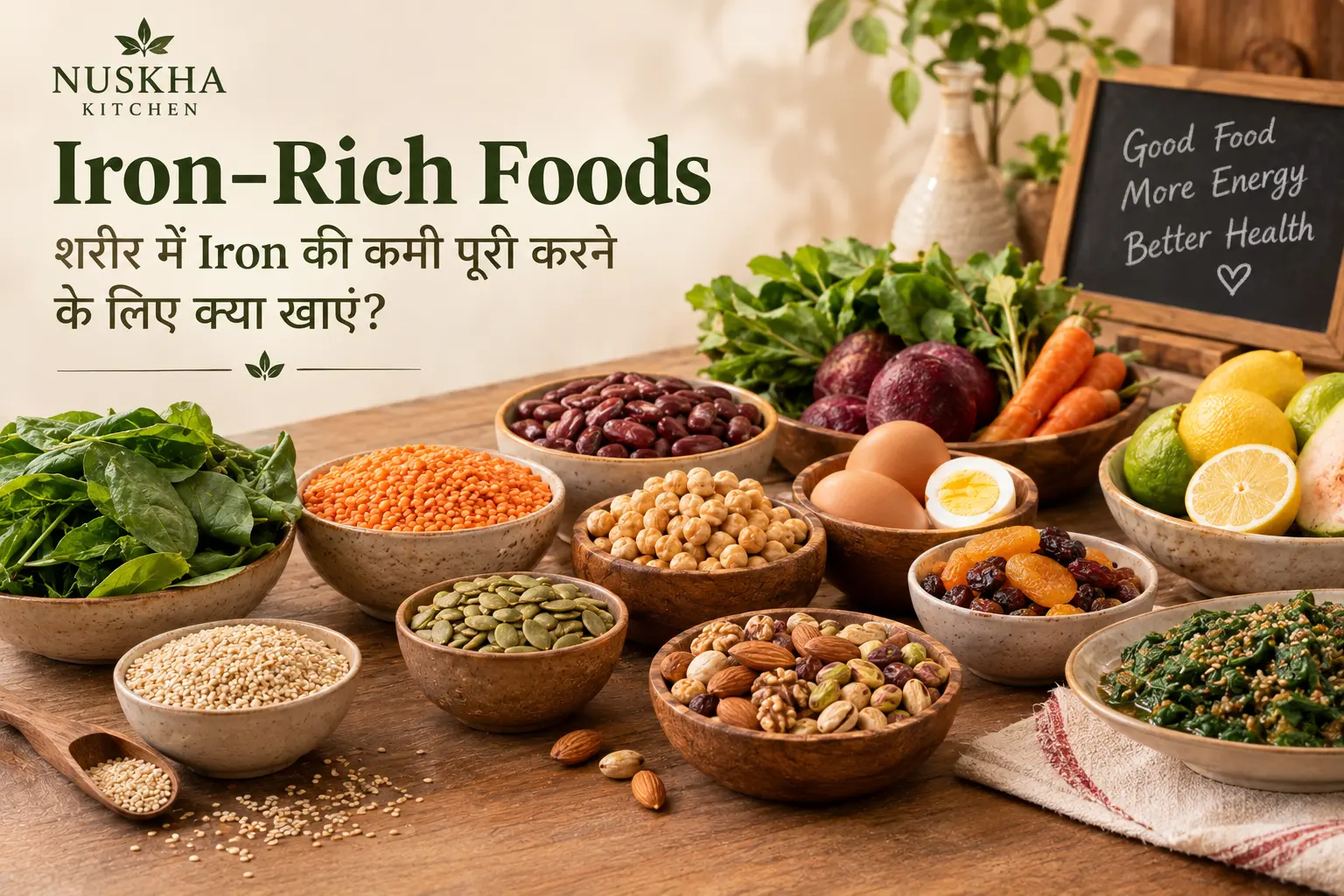
The good news is that everyday foods such as green leafy vegetables, lentils, beans, seeds, nuts and certain fruits can contribute iron to your diet.
But which foods are actually rich in iron? How can you improve iron absorption? And is eating jaggery or beetroot enough to meet your iron requirements?
Let's understand the best iron-rich foods and simple ways to include them in your daily Indian diet.
Iron performs several important functions:
1. Helps Produce Haemoglobin
Iron is required to make haemoglobin, which carries oxygen from the lungs to different parts of the body.
2. Supports Energy Metabolism
Iron helps several processes involved in energy production. Low iron levels can affect how you feel and function throughout the day.
3. Supports Normal Brain Function
Iron plays a role in brain development and normal cognitive functioning.
4. Supports Muscle Function
Iron is also involved in the production of myoglobin, a protein that helps supply oxygen to muscles.
A balanced diet can include both plant-based and animal-based sources of iron. Here are some options commonly available in Indian kitchens.
1. Green Leafy Vegetables
Green leafy vegetables such as spinach, amaranth leaves, mustard greens, bathua and fenugreek leaves contain iron.
You can include them in your meals through:
Palak dal
Sarson ka saag
Methi paratha
Bathua sabzi
Mixed green vegetable curry
Plant-based iron is not absorbed as efficiently as iron from many animal foods. Pairing leafy vegetables with vitamin C-rich foods can help improve absorption.
2. Lentils and Pulses
Dal and pulses are important sources of plant-based iron and protein.
Some options include:
Masoor dal
Moong dal
Chana dal
Rajma
Chickpeas
Black chana
Soybeans
Include different pulses throughout the week to add variety to your meals.
3. Sesame Seeds (Til)
Sesame seeds are commonly used in Indian recipes such as til-gud laddoo, chikki and chutneys.
They provide iron along with other nutrients such as calcium, magnesium, protein and unsaturated fats.
You can sprinkle sesame seeds over salads, add them to chutneys or use them in homemade snacks.
4. Pumpkin Seeds
Pumpkin seeds contain iron, protein, magnesium and healthy fats.
They can be added to:
Breakfast porridge
Homemade trail mixes
Salads
Smoothie bowls
Roasted seed mixtures
A small serving can add variety and nutrients to your everyday diet.
5. Chickpeas and Black Chana
Chickpeas and black chana are useful plant-based sources of iron, protein and fibre.
Some easy ways to enjoy them include:
Chana masala
Boiled black chana chaat
Hummus
Chana salad
Homemade roasted chana
Add lemon juice or tomatoes to your chana preparations to include vitamin C and support iron absorption.
6. Soybeans and Tofu
Soybeans and tofu provide plant-based protein and contain iron.
They can be included in a variety of Indian and international dishes, such as:
Tofu bhurji
Soybean curry
Tofu stir-fry
Soybean pulao
They are useful options for people following vegetarian diets.
7. Dry Fruits
Certain dried fruits, including raisins and dried apricots, contain iron.
You can add them to:
Breakfast porridge
Homemade laddoos
Dry fruit mixtures
Kheer
Homemade snack bars
Dry fruits also contain naturally occurring sugars, so enjoy them in suitable portions.
8. Whole Grains and Millets
Some whole grains and millets contribute iron to the diet.
Options include:
Bajra
Ragi
Jowar
Whole wheat
Oats
You can include them through rotis, porridge, khichdi and other homemade preparations.
Combining grains with pulses, vegetables and vitamin C-rich foods can help make meals more nutritionally varied.
9. Eggs, Fish and Meat
For people who consume animal-based foods, eggs, fish, poultry and meat can contribute iron.
Meat and seafood provide heme iron, which is generally absorbed more efficiently than the non-heme iron found in plant foods.
Eggs also contain iron, although the amount is comparatively modest.
10. Iron-Fortified Foods
Some foods, including certain cereals and flour products, may have iron added during manufacturing.
Check the nutrition label to see whether the product is fortified and how much iron it provides.
Eating iron-rich foods is important, but your body also needs to absorb the iron from those foods.
Here are some practical ways to support iron absorption.
1. Combine Iron-Rich Foods with Vitamin C
Vitamin C helps improve the absorption of non-heme iron from plant foods.
Try these food combinations:
Palak dal with lemon juice
Chana salad with tomatoes
Sprouts with lemon
Rajma with capsicum
Millet roti with amla chutney
Vitamin C-rich foods include amla, guava, oranges, lemon, tomatoes and capsicum.
2. Avoid Tea or Coffee with Main Meals
Tea and coffee contain compounds called polyphenols that can reduce the absorption of iron from plant foods.
Try having tea or coffee between meals rather than immediately before, during or soon after an iron-rich meal.
3. Include Different Iron Sources
Do not depend on just one food for iron. Include pulses, leafy vegetables, seeds, whole grains and other suitable sources throughout the week.
4. Prepare Pulses Properly
Soaking, sprouting and cooking pulses appropriately can help reduce some naturally occurring compounds that affect mineral absorption.
These preparation methods can also make pulses easier to include in everyday meals.
Women may have higher iron requirements during certain life stages, particularly during menstruation and pregnancy.
Some iron-rich foods to include in a varied diet are:
Spinach and other green leafy vegetables
Black chana
Rajma
Lentils
Sesame seeds
Pumpkin seeds
Whole grains
Eggs, fish or meat, if consumed
Iron-fortified foods
Heavy menstrual bleeding can increase the risk of iron deficiency. If you experience persistent tiredness, weakness or other concerning symptoms, consult a healthcare professional rather than relying only on dietary changes.
Iron is especially important during pregnancy because the body needs to support increased blood volume and the developing baby.
Pregnant women should include a variety of iron-containing foods, such as:
Lentils and beans
Green leafy vegetables
Sesame seeds
Iron-fortified foods
Eggs, fish or meat, if suitable
Vitamin C-rich foods can help improve the absorption of plant-based iron.
However, food alone may not meet the increased iron requirements during pregnancy. Iron and folic acid supplements are commonly recommended as part of antenatal care. Follow your doctor's advice regarding the appropriate supplement and dosage.
After delivery, nutritional needs continue to be important, particularly during recovery and breastfeeding.
A varied postpartum diet can include:
Dal and pulses
Green leafy vegetables
Whole grains and millets
Nuts and seeds
Dry fruits
Eggs, fish or meat, if consumed
Vitamin C-rich fruits
Traditional postpartum preparations such as gond laddoo and other homemade foods may provide energy and nutrients depending on their ingredients. However, they should not be considered substitutes for iron treatment or prescribed supplements.
If you experienced significant blood loss during delivery or have been diagnosed with anaemia, follow your healthcare professional's advice about testing, treatment and supplementation.
Iron deficiency may develop gradually, and some people may not notice symptoms initially.
Possible symptoms include:
Unusual tiredness
Weakness
Dizziness
Pale skin
Shortness of breath
Headaches
Difficulty concentrating
These symptoms can also occur due to other health conditions. They do not confirm iron deficiency on their own.
A healthcare professional may recommend a complete blood count (CBC), haemoglobin testing and ferritin testing to assess your iron status.
Myth 1: Eating jaggery is enough to increase iron levels.
Jaggery may contain small amounts of iron, but it is not a reliable treatment for iron deficiency. It should not replace iron-rich foods or prescribed supplements.
Myth 2: Beetroot is one of the richest sources of iron.
Beetroot contains some iron, but it is not among the most concentrated dietary sources. It can still be included as part of a varied diet.
Myth 3: Spinach alone can fulfil your daily iron requirements.
Spinach contains iron, but plant-based iron is not absorbed as efficiently as heme iron. A variety of iron sources and vitamin C-rich foods is a better approach.
Myth 4: Everyone who feels tired has iron deficiency.
Tiredness can have several causes, including poor sleep, stress and other nutritional or medical conditions. Testing may be needed to identify the actual cause.
Myth 5: Iron supplements can be taken without medical advice.
Excess iron can be harmful. Supplements should be taken according to professional guidance, especially during pregnancy and for children.
Here is an example of how you can include different iron sources in your everyday meals.
Breakfast: Besan chilla with tomato chutney or vegetable poha with peanuts.
Mid-morning: Guava, orange or another vitamin C-rich fruit.
Lunch: Bajra or whole-wheat roti, chana or rajma, green vegetable sabzi and lemon salad.
Evening snack: Roasted black chana or a small serving of nuts and seeds.
Dinner: Dal, seasonal vegetables and your preferred whole grain.
Additional tip: Have tea or coffee between meals instead of alongside your main meals.
This is a sample food routine, not a personalised treatment plan. Your nutritional requirements may differ depending on your age, health, activity level and life stage.
Iron is an essential mineral that supports haemoglobin production, oxygen transport and normal body functioning. Including a variety of iron-rich foods such as lentils, chickpeas, leafy vegetables, sesame seeds, pumpkin seeds, whole grains and suitable animal-based foods can help improve the nutritional quality of your everyday diet.
Remember to pair plant-based iron sources with vitamin C-rich foods and avoid having tea or coffee immediately with iron-rich meals.
If you suspect iron deficiency, consult a healthcare professional for appropriate testing and treatment. A balanced diet is an important part of good nutrition, but diagnosed iron deficiency may require medical care.