1. POST-DELIVERY IS A RECOVERY PHASE, NOT A RETURN TO NORMAL
One of the most common concerns we hear on call is:
“Delivery ho gayi, ab normal khana kab shuru karein?”
Ayurveda clearly states that the post-delivery phase—called Sutika Kaal—is a rebuilding phase. During this time:
Vata dosha is highly aggravated
Digestive fire (Agni) is weak
Blood, tissues, and strength are depleted
Hormonal and emotional fluctuations are natural
Traditionally, Indian households followed a structured food system after childbirth. Foods were warm, digestible, nourishing, and introduced gradually. Nothing was random.
Modern life has broken this structure, leading to confusion, delayed recovery, digestive issues, and lactation concerns.
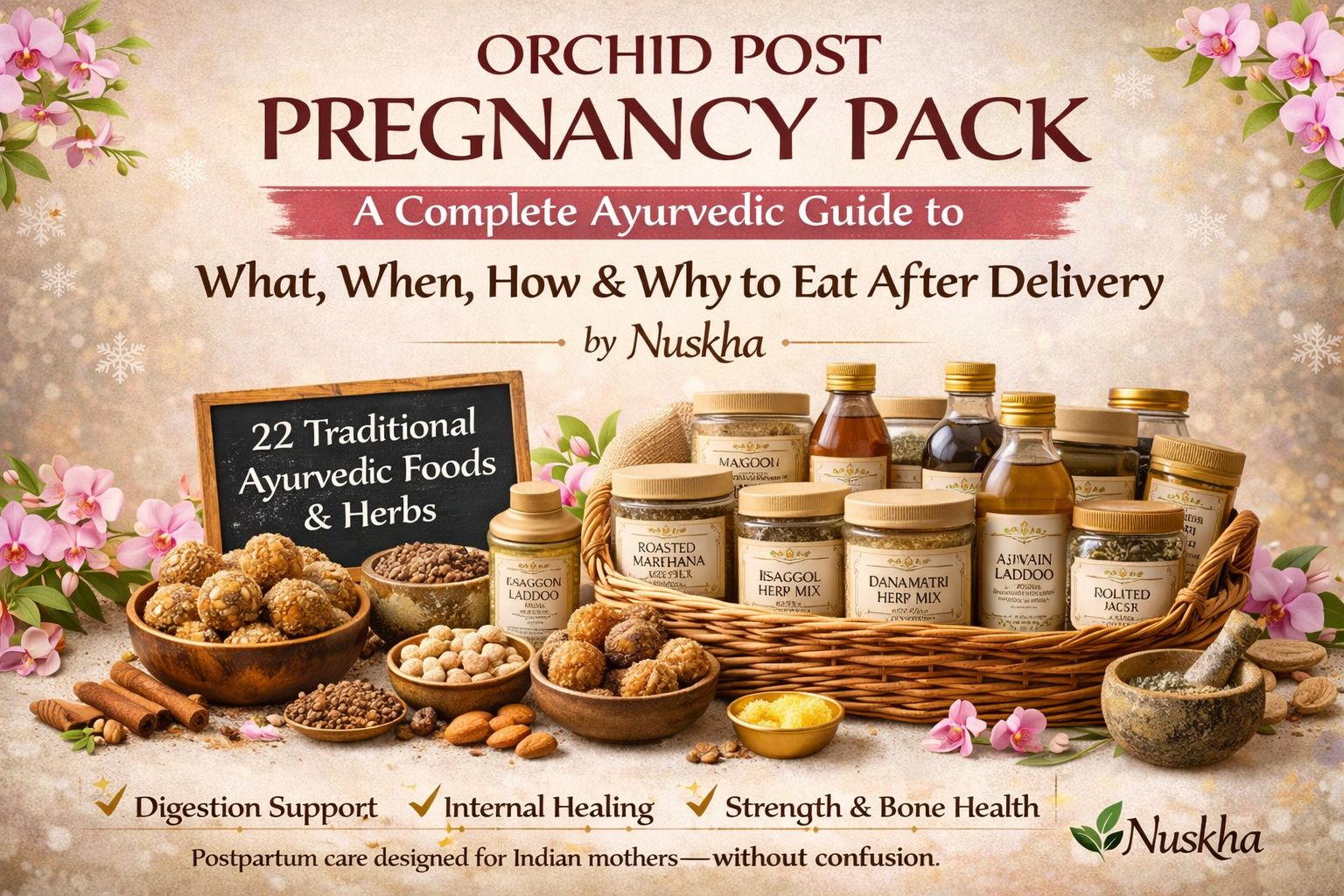
The Orchid Post Pregnancy Pack is designed to restore this lost structure.
2. HOW ORCHID POST PREGNANCY PACK IS DESIGNED
When a new mother connects with us on call, we do not give generic advice. We first understand:
Normal delivery or C-section
Current digestion and bowel movement
Body heat (excess warmth or cold sensitivity)
Climate and season
Age and physical strength
Only then do we guide her on how to consume the items in the pack.
The pack itself is designed so that:
Digestion is supported first
Healing comes next
Strength and lactation are built gradually
This ensures recovery without overwhelm.
3. WHAT’S INSIDE THE ORCHID POST PREGNANCY PACK
Detailed Explanation of All 22 Items
Ajwain laddoo is one of the first foods recommended after delivery because digestion is weakest during this phase. It helps relieve gas, bloating, abdominal discomfort, and heaviness while gently activating digestive fire.
In Ayurveda, ajwain is warming and vata-balancing, which makes it ideal for restoring gut strength without irritation. Traditionally, ajwain-based foods were always introduced early in postpartum diets for this reason.
Whole ajwain is included for daily digestive maintenance. It helps detoxify the gut, prevent gas formation, and improve digestion when taken as water or added to rotis.
Culturally, ajwain water has been a staple postpartum drink in Indian households, especially during the first few weeks after delivery.
Kaifal is traditionally used to relieve post-delivery headaches and mental heaviness caused by hormonal changes, disturbed sleep, and physical strain.
In Ayurveda, kaifal is known for its grounding and calming effect on the nervous system and is used externally to provide relief without internal stimulation.
Jaifal is included mainly for traditional baby care practices. It has been used externally for generations to provide mild warmth and comfort during baby colds.
Its relevance lies in cultural postpartum routines where gentle, natural remedies were preferred for newborn care.
5. Sonth (Dried Ginger) Laddoo
Sonth laddoo supports metabolism recovery, improves circulation, and helps relieve joint and muscle pain after childbirth. It also strengthens digestion and reduces internal coldness.
Ayurvedically, sonth is classified as deepana and pachana, meaning it improves digestive fire and helps the body absorb nourishment effectively.
Haldi laddoo supports internal healing by reducing inflammation and strengthening immunity after delivery. It plays an important role in tissue repair and recovery.
Because turmeric is warming, its quantity is carefully balanced to ensure healing without excess heat.
Dashmool kaadha is a classical Ayurvedic formulation widely recommended after childbirth. It supports uterine recovery, strengthens nerves, and helps reduce lower back and pelvic pain.
Traditionally, Dashmool has been used to restore strength after physical trauma, making it essential in postpartum recovery.
Lodh supports uterine contraction and internal healing after delivery. It helps stabilise the body and aids recovery of reproductive tissues.
In Ayurvedic postpartum care, lodh is especially valued when deeper uterine support is required.
Battesa acts as a gentle recovery tonic that supports digestion while gradually rebuilding strength. It allows the body to accept nourishment without digestive strain.
Culturally, battesa has been used during postpartum confinement for smooth recovery.
Gond laddoo provides sustained energy and supports bone and joint strength after delivery. It helps rebuild tissues weakened during pregnancy and childbirth.
Ayurveda associates gond with nourishment of asthi dhatu (bone tissue), making it relevant for postpartum recovery.
Post-delivery oil massage improves circulation, reduces stiffness, and calms the nervous system. It is essential for relieving body aches and restoring balance.
Ayurveda considers abhyanga (oil massage) critical during postpartum care to pacify vata and support deep healing.
Dana methi supports hormonal balance and helps regulate milk production. It also improves digestion and reduces internal dryness.
Traditionally, methi has been associated with women’s reproductive health and lactation support.
Jeera aids digestion, reduces bloating, and supports detoxification. It keeps the digestive system active without irritation.
Jeera water is one of the most commonly recommended postpartum drinks in Indian tradition.
Peepal supports gut health and helps reduce inflammation after delivery. It contributes to metabolic balance when used in controlled amounts.
In Ayurveda, peepal is valued for its healing and balancing properties.
Baby massage oil supports muscle development, circulation, and better sleep in infants. Regular oil massage is an essential part of traditional Indian newborn care.
Ayurveda emphasises early massage to strengthen the baby’s nervous and muscular systems.
Roasted makhana provides light nourishment with protein and calcium while being easy to digest. It offers energy without burdening the gut.
It is traditionally preferred as a postpartum snack for gentle strength building.
Roasted kaju provides healthy fats and energy needed for recovery. It supports tissue nourishment and gradual strength rebuilding.
Because nuts are heavy, their quantity is always moderated postpartum.
Ragi laddoo supports bone health and improves iron intake after blood loss during delivery. It helps restore strength gradually.
Ayurveda values ragi for its grounding and nourishing qualities.
Bhuna daliya provides wholesome nourishment while remaining easy to digest. It supports sustained energy and controlled hunger.
Traditionally, simple grain-based meals were preferred postpartum to protect digestion.
Mukhwaas supports digestion after meals and prevents heaviness. It helps maintain digestive comfort during recovery.
Digestive seeds have long been part of Indian post-meal traditions.
Isabgol supports bowel regularity and prevents constipation, which is very common after delivery, especially after C-section.
Ayurveda recommends gentle fibre sources to restore gut balance safely.
Shatavari supports lactation, hormonal balance, and long-term recovery. It nourishes reproductive tissues and supports emotional stability.
In Ayurveda, shatavari is considered a rasayana for women and is central to postpartum care.
4. NORMAL DELIVERY VS C-SECTION: HOW WE CUSTOMISE
The products remain the same, but:
Order of consumption changes
Quantity changes
Timing changes
C-section recovery prioritises digestion and bowel health for longer, while normal delivery allows slightly earlier progression.
This customisation is explained clearly on call.
5. WHY ORCHID PACK REMOVES ALL CONFUSION
You do not need to:
Guess what to eat
Google every ingredient
Worry about overdoing or underdoing
The Orchid Pack gives structure, clarity, and guidance, exactly the way postpartum care was meant to be.
FAQs – BASED ON REAL CALL QUESTIONS
Q1. When should I start using the Orchid Post Pregnancy Pack?
You can start as soon as digestion stabilises after delivery. Usage is phased and guided.
Q2. Is this pack suitable for C-section mothers?
Yes. The pack is especially helpful for C-section recovery. Consumption order and quantity are adjusted.
Q3. Can everything be eaten at once?
No. Postpartum recovery requires sequencing. This is explained clearly during guidance.
Q4. Will this help with lactation?
Yes. Ingredients like shatavari and dana methi support milk production naturally.
Q5. Is this suitable in summer as well?
Yes. Quantities and warming foods are adjusted based on climate.
Q6. Do I still need to plan my diet separately?
No. This pack is designed to remove that burden.