


 Nuskha Maa
−
×
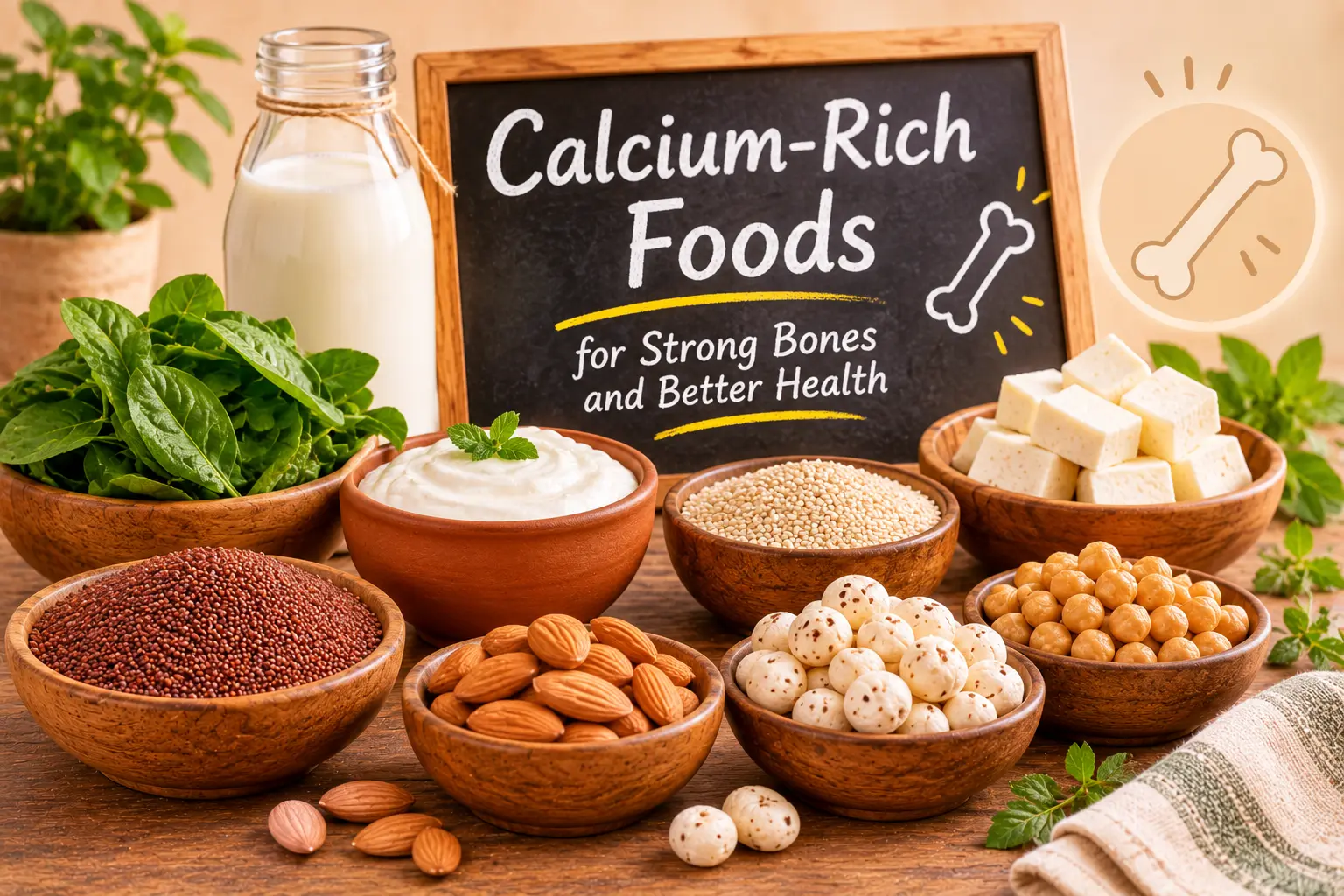
Calcium is an essential mineral that plays an important role in maintaining strong bones and teeth. It also supports muscle movement, nerve function and several other processes in the body. Since the body cannot produce calcium on its own, we need to obtain it through our daily diet.
A balanced Indian diet offers several calcium-rich food options, including milk, curd, sesame seeds, ragi, leafy vegetables and pulses. Including a variety of these foods can help support your daily calcium intake.
In this blog, let's explore the best calcium-rich foods, vegetarian sources of calcium and simple ways to include them in your everyday meals.
Calcium is best known for its role in bone and dental health, but its functions go beyond that.
Some important roles of calcium include:
Bone and teeth health: Most of the body's calcium is stored in bones and teeth.
Muscle function: Calcium helps muscles contract and relax.
Nerve signalling: It supports communication between nerves and different parts of the body.
Blood clotting: Calcium is involved in the normal blood-clotting process.
Normal body functioning: It supports several essential cellular activities.
Getting enough calcium throughout life is important, particularly during childhood, adolescence, pregnancy, breastfeeding and older age.
You don't always need complicated meal plans to include calcium in your diet. Many everyday Indian foods contain calcium and can be added to regular meals.
1. Milk
Milk is one of the most familiar sources of dietary calcium. It also provides protein and other nutrients.
You can include milk in your breakfast, have it with your evening meal or use it in homemade smoothies and porridge.
2. Curd (Dahi)
Curd is another convenient calcium source and can be included in everyday Indian meals.
Enjoy it as plain dahi, raita or alongside lunch. Choose unsweetened curd to avoid unnecessary added sugar.
3. Ragi (Finger Millet)
Ragi is a traditional millet known for its naturally high calcium content. It is a useful option for people looking to include plant-based calcium sources in their diet.
Ways to enjoy ragi:
Ragi roti
Ragi dosa
Ragi porridge
Ragi cheela
Ragi-based homemade snacks
4. Sesame Seeds (Til)
Sesame seeds are a good plant-based source of calcium. They are commonly used in Indian cooking, particularly during winter.
You can add sesame seeds to:
Chutneys
Laddoos
Homemade energy bars
Vegetable preparations
Rotis and parathas
Sesame seeds are calorie-dense, so enjoy them in suitable portions.
5. Paneer
Paneer provides calcium and protein, making it a useful addition to vegetarian meals. Its calcium content can vary depending on how it is prepared.
Try adding paneer to sabzi, sandwiches, parathas or homemade wraps.
6. Green Leafy Vegetables
Some leafy vegetables contain calcium along with fibre, vitamins and other minerals.
Options include:
Amaranth leaves (chaulai)
Bathua
Kale
Mustard greens (sarson)
Not all leafy greens provide calcium equally well. Spinach contains calcium, but it also has oxalates that reduce how much calcium the body absorbs.
7. Soybeans and Tofu
Soybeans are a source of plant-based protein and contain calcium. Calcium content in tofu depends on the coagulant used during preparation.
Check the nutrition label when buying tofu, especially if you are choosing it specifically as a calcium source.
8. Almonds (Badam)
Almonds provide calcium along with healthy fats, protein and other nutrients.
Enjoy a small handful as a snack or add chopped almonds to porridge, smoothies and homemade snacks.
9. Chickpeas (Chana)
Chickpeas contain calcium, protein and dietary fibre. They are easy to include in an Indian vegetarian diet.
You can prepare:
Chana chaat
Chole
Roasted chana
Chickpea salad
Homemade hummus
10. Makhana
Makhana, also known as fox nuts, contains several minerals, including some calcium. It can be enjoyed roasted as a snack or added to homemade recipes.
11. Fortified Foods
Some packaged foods, such as plant-based milk alternatives and breakfast cereals, are fortified with calcium.
Always check the nutrition label to confirm the amount of calcium per serving. Shake fortified plant milk before use if the packaging recommends it.
12. Fish with Edible Bones
Certain fish, such as sardines, provide calcium when their soft bones are eaten. This can be an option for people who include fish in their diet.
Calcium is important for women at different stages of life. Adequate calcium intake supports bone health, particularly as nutritional needs change with age.
Some useful food choices include:
Milk and curd
Ragi and other calcium-containing millets
Sesame seeds
Paneer
Almonds
Calcium-set tofu
Green leafy vegetables
A varied diet is generally more helpful than depending on just one food item.
Calcium is important during pregnancy because it supports the development of the baby's bones and teeth while also helping maintain the mother's nutritional requirements.
During breastfeeding, calcium continues to play an important role in normal body functioning and bone health.
Some calcium-containing foods that can be included in meals are:
Milk and curd
Paneer
Ragi
Sesame seeds
Calcium-fortified foods
Suitable green leafy vegetables
Pregnant and breastfeeding women should discuss their individual nutritional requirements and any need for supplements with their healthcare professional. Food choices and supplements may need to be adjusted according to individual circumstances.
Eating calcium-rich foods is important, but the body also needs to absorb calcium effectively.
Here are a few points to consider:
1. Get enough vitamin D
Vitamin D helps the body absorb calcium. Include suitable vitamin D food sources and discuss supplementation with a healthcare professional if needed.
2. Include different calcium sources
Don't depend on just milk or one particular food. A varied diet can provide a wider range of nutrients.
3. Prepare foods appropriately
Soaking, fermenting and cooking certain foods can help reduce some naturally occurring compounds that affect mineral availability.
4. Maintain balanced nutrition
Protein, vitamin D and other nutrients also contribute to overall bone health.
Here is a simple example of how calcium-containing foods can fit into everyday meals.
| Meal | Food options |
|---|---|
| Early morning | Milk or a suitable fortified alternative |
| Breakfast | Ragi dosa with curd |
| Mid-morning | Almonds |
| Lunch | Roti, dal, vegetable sabzi and curd |
| Evening snack | Roasted makhana or sesame-based snack |
| Dinner | Paneer or tofu sabzi with roti |
| Bedtime | Milk, if preferred |
This is only an illustrative meal plan. Individual dietary requirements, portion sizes and food preferences may differ.
Myth 1: Only milk contains calcium.
Fact: Ragi, sesame seeds, tofu, leafy vegetables and fortified foods can also contribute calcium.
Myth 2: Taking more calcium is always better.
Fact: Excessive calcium intake, particularly from supplements, may cause problems. Supplements should be taken only when appropriate and in recommended amounts.
Myth 3: Calcium is important only for older people.
Fact: Calcium is needed throughout life, from childhood to older age.
Myth 4: Eating calcium-rich foods alone is enough for bone health.
Fact: Bone health also depends on vitamin D, physical activity, overall nutrition and other lifestyle factors.
Calcium is an important part of a balanced diet at every stage of life. Traditional Indian foods such as ragi, sesame seeds, curd, milk, paneer and leafy vegetables offer practical ways to include calcium in everyday meals.
Instead of relying on a single food, focus on variety, balanced meals and suitable portions. If you are pregnant, breastfeeding, have a diagnosed deficiency or are considering calcium supplements, consult a qualified healthcare professional for guidance.
Small, consistent food choices can help you build a more balanced approach to everyday nutrition.