


 Nuskha Maa
−
×
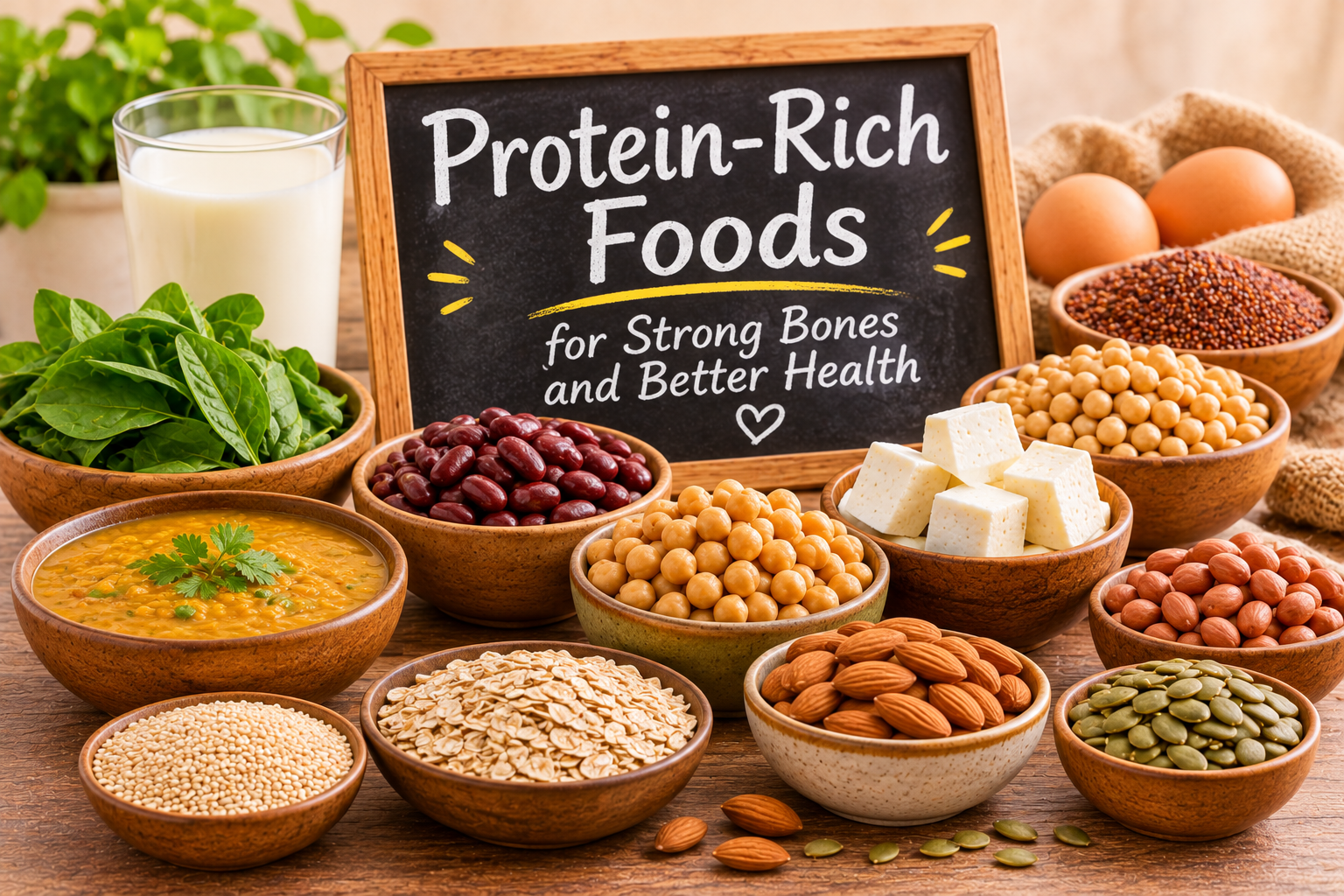
Protein is one of the most important nutrients required by the body. It plays a major role in muscle development, tissue repair, growth and the normal functioning of the immune system. Whether you follow a vegetarian or non-vegetarian diet, including enough protein in your daily meals is an important part of balanced nutrition.
Indian kitchens already have several protein-rich ingredients, such as dal, chana, rajma, paneer, milk, curd, soybeans, nuts and seeds. With the right food combinations, you can make everyday meals more nutritious without making your diet complicated.
In this blog, let's explore the best protein-rich Indian foods, vegetarian protein sources and easy ways to include protein in your daily diet.
Protein is made up of smaller units called amino acids. These are used by the body for several essential functions.
Some important roles of protein include:
Muscle development: Protein provides amino acids required for building and maintaining muscles.
Tissue repair: It supports the repair and maintenance of body tissues.
Growth and development: Protein is essential during childhood, adolescence and other stages of growth.
Immune function: Several components of the immune system are made using proteins.
Enzyme and hormone production: Protein helps the body produce enzymes and certain hormones.
Overall nutrition: Including protein in balanced meals helps meet daily nutritional requirements.
The amount of protein a person needs depends on factors such as age, body weight, activity level, health status and life stage.
You don't need expensive foods or complicated recipes to include protein in your meals. Many everyday Indian ingredients can contribute to your daily protein intake.
1. Moong Dal
Moong dal is a popular Indian food that provides plant-based protein along with dietary fibre and other nutrients.
You can include it in your diet through:
Moong dal khichdi
Moong dal cheela
Dal soup
Sprouted moong salad
It is versatile and can be used in breakfast, lunch or dinner.
2. Chana (Chickpeas)
Chickpeas are a good source of plant-based protein and fibre. They are commonly used in Indian households and can be prepared in different ways.
Try including:
Kala chana curry
Chole
Roasted chana
Chana salad
Homemade hummus
3. Rajma
Rajma is a familiar part of North Indian meals and provides plant-based protein, fibre and several minerals.
Rajma can be enjoyed with rice, roti or in a homemade bean salad. Soaking and cooking it properly is important before consumption.
4. Paneer
Paneer is a useful protein source for people following a vegetarian diet. It also contains calcium, although its exact nutritional composition varies with the preparation method.
Some easy ways to include paneer are:
Paneer bhurji
Paneer paratha
Paneer tikka
Paneer vegetable curry
Paneer sandwiches
5. Soybeans
Soybeans are among the protein-rich plant foods. They also contain other nutrients and can be included in a variety of recipes.
Options include boiled soybeans, soy chunks, tofu and soybean-based preparations.
6. Milk
Milk provides protein along with calcium and other nutrients. It can be consumed on its own or added to everyday recipes.
You can include milk in:
Breakfast porridge
Smoothies
Homemade milk-based drinks
Oats and cereal preparations
7. Curd (Dahi)
Curd provides protein and calcium and is easy to include in Indian meals.
Enjoy plain curd, vegetable raita or homemade curd-based dips. Greek yoghurt and strained curd can provide more protein per serving than regular curd, depending on the product.
8. Peanuts (Moongfali)
Peanuts contain plant-based protein and healthy fats. They are an affordable ingredient commonly used in Indian snacks and meals.
You can enjoy them as:
Roasted peanuts
Peanut chutney
Peanut chaat
Homemade peanut butter
Peanut-based snacks
Since peanuts are energy-dense, portion size is worth considering.
9. Almonds (Badam)
Almonds provide some protein along with healthy fats, fibre and vitamin E.
Add chopped almonds to porridge, smoothies and homemade snacks, or enjoy a small handful as part of a balanced snack.
10. Pumpkin Seeds
Pumpkin seeds are a convenient source of plant-based protein and minerals.
You can sprinkle them over salads, add them to smoothies or mix them with other seeds and nuts for a homemade snack.
11. Oats
Oats contain protein and soluble fibre. They can be combined with milk, curd, nuts and seeds to make a more balanced breakfast.
Some easy options include:
Overnight oats
Oats porridge
Oats cheela
Savoury oats
Homemade oats laddoo
12. Ragi
Ragi is a traditional millet that provides fibre and some protein, along with calcium.
It can be prepared as ragi dosa, ragi roti, porridge or cheela. Pairing it with dal, curd or paneer can make the overall meal more protein-rich.
13. Eggs
Eggs are a source of high-quality protein and can be included in breakfast, lunch or dinner by people who consume them.
Some simple options include boiled eggs, omelettes, egg bhurji and egg curry.
14. Fish and Chicken
For people who include non-vegetarian foods in their diet, fish and chicken are useful sources of protein.
Choose suitable cooking methods such as grilling, steaming, baking or preparing homemade curries with moderate amounts of oil.
15. Lentils and Mixed Pulses
Different lentils, including masoor dal, toor dal, urad dal and mixed pulses, contribute plant-based protein.
Rotating different dals throughout the week can add variety to your meals and provide a range of nutrients.
If you follow a vegetarian diet, there are plenty of options available.
| Food | How to include it |
|---|---|
| Moong dal | Cheela, khichdi or dal |
| Chana | Chole, salad or roasted chana |
| Rajma | Rajma curry |
| Paneer | Bhurji, curry or tikka |
| Soybeans | Soy chunks or tofu |
| Milk | Milk or porridge |
| Curd | Raita or plain curd |
| Peanuts | Chutney or roasted snack |
| Pumpkin seeds | Salad or snack topping |
| Mixed dals | Everyday dal preparations |
Combining different plant-based protein sources throughout the day can help provide a variety of amino acids.
Protein is important for women at every stage of life. It supports normal muscle function, tissue maintenance and overall nutritional needs.
Some convenient protein-containing foods for women include:
Moong dal and other pulses
Paneer and curd
Milk
Soybeans and tofu
Chana and rajma
Nuts and seeds
Eggs, fish and chicken, if consumed
A balanced diet should include different food groups rather than depending on one protein source.
Protein requirements can change during pregnancy and breastfeeding because the body has additional nutritional needs.
A variety of foods can contribute to protein intake, including:
Dal and pulses
Milk and curd
Paneer
Soy foods
Eggs
Fish and chicken, if suitable
Nuts and seeds
Food safety and individual dietary needs are especially important during pregnancy. Pregnant and breastfeeding women should consult their healthcare professional or qualified dietitian for personalised nutrition guidance.
You don't have to change your entire eating routine to include more protein. Small food combinations can make everyday meals more balanced.
1. Make breakfast more nutritious
Instead of having only tea and toast, try moong dal cheela with curd, paneer paratha or oats prepared with milk.
2. Add dal to your lunch
Include dal, rajma or chana along with roti or rice and vegetables.
3. Choose protein-containing snacks
Roasted chana, peanuts, curd, milk, almonds and seeds can be convenient snack options.
4. Include protein at dinner
Add paneer, tofu, dal, eggs or chicken to your dinner according to your food preferences.
5. Rotate your protein sources
Eating different pulses, dairy products, nuts, seeds and other protein-containing foods can make your diet more varied.
Here is an illustrative daily meal plan using commonly available Indian foods.
| Meal | Food options |
|---|---|
| Early morning | Milk or a suitable alternative |
| Breakfast | Moong dal cheela with curd |
| Mid-morning | A handful of almonds or roasted chana |
| Lunch | Roti, dal, vegetable sabzi and curd |
| Evening snack | Sprouts chaat or roasted peanuts |
| Dinner | Paneer/tofu sabzi with roti |
| Bedtime | Milk, if preferred |
This is a general example, not an individualised diet plan. Portion sizes and protein requirements vary from person to person.
Myth 1: Only non-vegetarian foods contain protein.
Fact: Dal, chana, rajma, paneer, soybeans, milk, nuts and seeds also provide protein.
Myth 2: Protein is needed only by people who exercise.
Fact: Protein is essential for everyone because the body uses it for tissue maintenance, growth and several normal functions.
Myth 3: Eating more protein is always better.
Fact: Protein intake should match individual nutritional needs. Excessive intake is not automatically beneficial.
Myth 4: Dal alone always provides enough protein.
Fact: Dal contributes protein, but total daily intake depends on the quantity consumed and the rest of the diet.
Myth 5: Protein powders are necessary for everyone.
Fact: Many people can meet their protein requirements through regular foods. Supplements may be useful in certain situations, but they are not essential for everyone.
Protein is an essential part of everyday nutrition, and Indian food offers several ways to include it in your meals. From dal, chana and rajma to paneer, milk, soybeans, nuts and seeds, there are plenty of vegetarian and non-vegetarian options to choose from.
Focus on variety, balanced meals and suitable portions instead of depending on a single food. If you have specific nutritional requirements, are pregnant or breastfeeding, or have a medical condition affecting your diet, consult a qualified healthcare professional or dietitian.
A balanced approach to food can help you meet your nutritional needs while enjoying familiar, traditional Indian meals.