


 Nuskha Maa
−
×
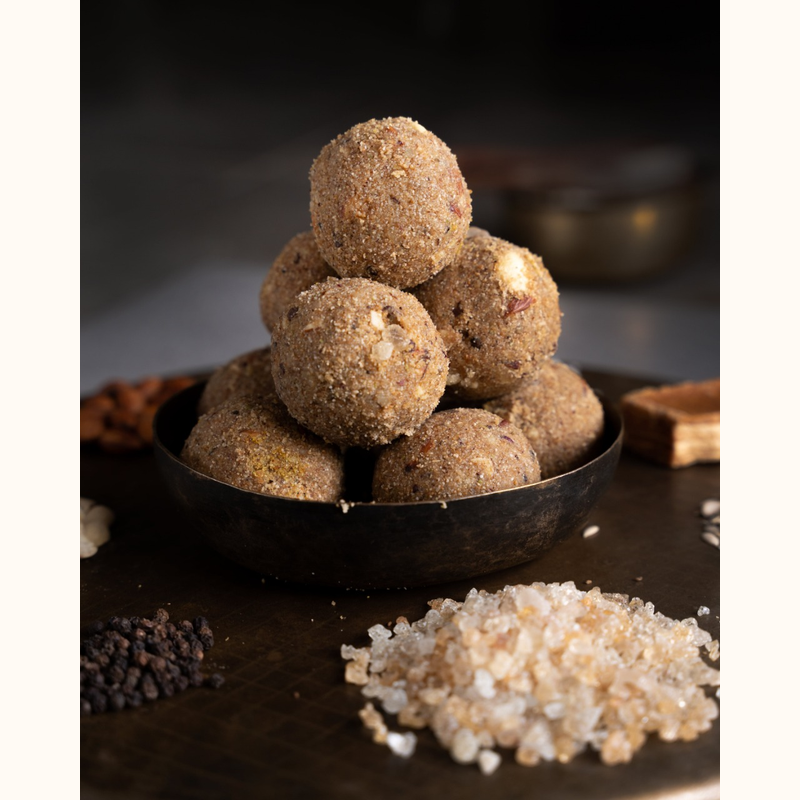
As winter arrives, our food habits naturally begin to change. We enjoy warm meals, seasonal vegetables, dry fruits, nuts and traditional homemade sweets. One such winter favourite in many Indian households is Gond Laddu.
Prepared using edible gum (gond), ghee, wheat flour, nuts and sweeteners such as jaggery or sugar, Gond Laddu has been a part of traditional Indian food culture for generations.
From its rich ingredients to its satisfying taste, this traditional laddu is often enjoyed during colder months. But what makes Gond Laddu a popular winter food? What ingredients does it contain, and how can you include it in a balanced diet?
Let's explore.
Gond Laddu is a traditional Indian sweet commonly prepared during winter. Its main ingredient is edible gum, also known as gond, which is obtained from certain plant sources.
The edible gum is usually fried in ghee until it puffs up and becomes crisp. It is then combined with roasted flour, nuts, seeds and a sweetener to prepare laddus.
Depending on family traditions and regional recipes, ingredients may include:
Edible gum (gond)
Pure ghee
Wheat flour
Almonds
Cashews
Makhana
Jaggery or sugar
Other nuts and seeds
Every household may have its own recipe, which gives this traditional sweet a unique taste and texture.
Gond Laddu is especially popular in North Indian households during winter. There are a few reasons behind its seasonal popularity.
1. Made with Energy-Dense Ingredients
Gond Laddu contains ingredients such as ghee, nuts, flour and sweeteners. These ingredients provide energy, making the laddu a calorie-dense food.
It is traditionally enjoyed as a small sweet or snack during colder months.
2. Contains Nuts and Seeds
Almonds, cashews and other nuts are often included in Gond Laddu recipes. They provide fats, some protein, fibre and minerals.
The nutritional content depends on the ingredients and quantities used.
3. A Traditional Homemade Winter Food
Many Indian families prepare Gond Laddu in batches during winter. It is also commonly shared with family members as a homemade festive or seasonal treat.
Its popularity is closely connected to traditional food practices and family recipes.
4. Convenient to Include in a Daily Routine
Gond Laddu can be stored and enjoyed as a small snack. Since it is energy-dense, a suitable portion is important.
The nutritional value of Gond Laddu depends on its recipe, size and ingredients.
Here is what its commonly used ingredients can contribute:
| Ingredient | Nutritional contribution |
|---|---|
| Edible gum (Gond) | Traditionally used as a food ingredient |
| Ghee | Provides dietary fat and energy |
| Almonds | Provide healthy fats, protein and vitamin E |
| Cashews | Provide fats, protein and minerals |
| Wheat flour | Provides carbohydrates and some fibre |
| Makhana | Provides carbohydrates and some minerals |
| Jaggery | Provides carbohydrates and energy |
Since recipes differ, there is no single nutritional value that applies to every Gond Laddu.
Edible Gum (Gond)
Gond is the key ingredient that gives the laddu its name. It is generally fried in ghee before being mixed with the other ingredients.
It develops a light, crunchy texture after frying and is traditionally used in several Indian sweets.
Ghee
Ghee adds flavour, aroma and richness to Gond Laddu. It also contributes fat and energy.
The quantity of ghee used can significantly affect the final calorie content.
Almonds and Cashews
Nuts add texture and flavour while contributing fats, protein and minerals.
They also make the laddu more nutrient-dense.
Wheat Flour
Roasted wheat flour gives the laddu its structure and helps combine the ingredients.
It provides carbohydrates and some dietary fibre.
Jaggery
Jaggery is used as a traditional sweetener in many recipes. It provides energy, but it is still a form of added sugar and should be consumed in moderation.
Gond Laddu is energy-dense because it commonly contains ghee, flour, nuts and sweeteners.
Rather than eating several laddus in one sitting, enjoy a suitable portion according to your overall diet and energy requirements.
A few practical tips:
Start with a small portion.
Consider the size and ingredients of the laddu.
Include it as part of a balanced diet rather than replacing regular meals.
Be mindful of added sugar and ghee.
Adjust your portion according to your dietary needs.
People managing blood sugar, calorie intake or specific health conditions should discuss suitable portions with their healthcare professional or dietitian.
Gond Laddu can be enjoyed by adults who like traditional Indian sweets and do not have dietary restrictions related to its ingredients.
However, individual needs differ.
For adults: It can be enjoyed occasionally as a traditional winter snack in suitable portions.
For older adults: Portion size and individual dietary requirements should be considered, especially when managing health conditions.
For people with nut allergies: Check the ingredients carefully, as many recipes contain almonds, cashews or other nuts.
For people with diabetes: The sweetener and total carbohydrate content should be considered before including it in the diet.
Gond Laddu does not need to be eaten on its own. It can be included alongside other seasonal foods as part of a varied diet.
Here are a few simple ideas:
Enjoy a small laddu with your morning or afternoon snack.
Pair it with a glass of milk if it suits your dietary preferences.
Include seasonal fruits and vegetables in your other meals.
Rotate it with other traditional foods such as til laddoo, dry fruits and homemade snacks.
Maintain variety instead of depending on one winter food.
India has many traditional laddus prepared with different ingredients. Each has its own taste and nutritional composition.
| Laddu | Common ingredients |
|---|---|
| Gond Laddu | Edible gum, ghee, flour and nuts |
| Til Laddu | Sesame seeds and jaggery |
| Methi Laddu | Fenugreek seeds, ghee, flour and sweetener |
| Dry Fruit Laddu | Almonds, cashews, dates and other dry fruits |
| Sonth Laddu | Dry ginger, ghee, flour and sweetener |
The nutritional value of each laddu depends on its recipe and serving size.
Myth 1: Gond Laddu should only be eaten in winter.
Fact: It is traditionally popular during winter, but whether it suits someone depends on their dietary needs and preferences.
Myth 2: Gond Laddu can replace a complete meal.
Fact: Gond Laddu is a sweet snack, not a nutritionally complete meal. A balanced diet should include different food groups.
Myth 3: Eating more Gond Laddu provides more benefits.
Fact: Gond Laddu is energy-dense. Eating larger portions does not automatically make it more beneficial.
Myth 4: All Gond Laddus have the same nutritional value.
Fact: Ingredients, quantities and preparation methods vary, so nutritional values can differ considerably.
Gond Laddu is more than just a traditional Indian sweet. It represents a food tradition that many families continue to enjoy during winter.
Made with edible gum, ghee, flour and nuts, it offers a combination of flavour and energy-dense ingredients. Like other traditional sweets, it is best enjoyed in suitable portions as part of a varied and balanced diet.
This winter, enjoy traditional foods mindfully, include seasonal ingredients in your meals and make room for a variety of nutritious choices.
Celebrate winter with the warmth of traditional Indian food and the goodness of balanced eating.