


 Nuskha Maa
−
×
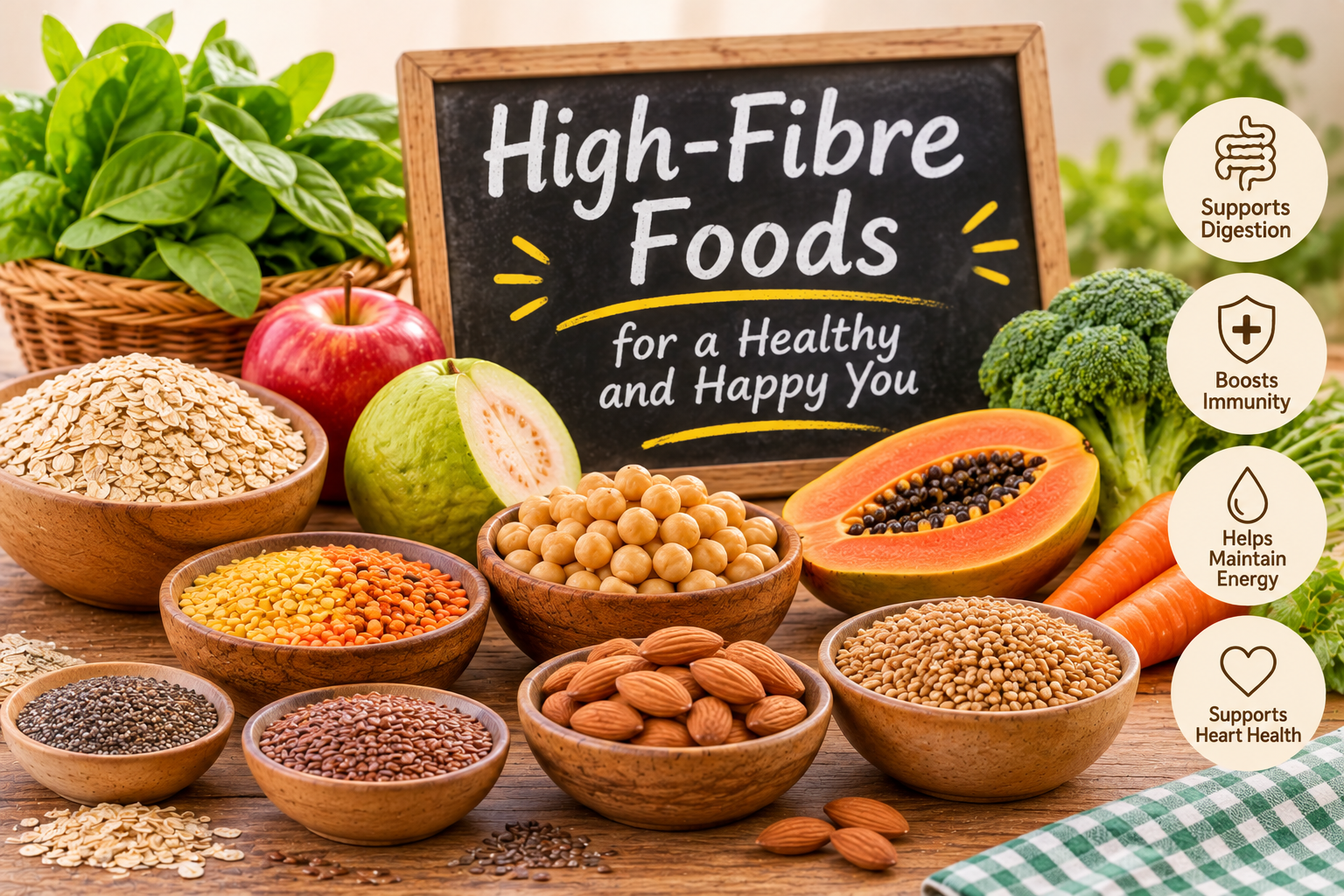
Dietary fibre is an important part of a balanced diet. It is found naturally in plant-based foods such as fruits, vegetables, whole grains, pulses, nuts and seeds. Including enough fibre in everyday meals supports normal digestion and helps maintain regular bowel movements.
However, many people do not pay enough attention to fibre when planning their daily meals. Simple Indian foods such as oats, dal, whole wheat, fruits, vegetables, chana and seeds can help increase daily fibre intake.
In this blog, let's explore the best high-fibre foods, their nutritional benefits and easy ways to include more fibre in your everyday Indian diet.
Dietary fibre is a type of carbohydrate found in plant-based foods that the body does not completely digest.
There are two commonly discussed types of dietary fibre:
1. Soluble Fibre
Soluble fibre dissolves in water and forms a gel-like substance during digestion. It is found in foods such as oats, apples, citrus fruits, beans and certain seeds.
2. Insoluble Fibre
Insoluble fibre does not dissolve in water. It adds bulk to stool and supports regular bowel movements. Whole grains, wheat bran, vegetables, nuts and seeds are some sources.
Both types contribute to a balanced diet, so eating a variety of fibre-containing foods is helpful.
Fibre supports several aspects of digestive and overall health.
Supports regular bowel movements: Fibre helps add bulk to stool and supports bowel regularity.
Supports gut health: Some types of fibre are used by beneficial gut bacteria.
Helps with fullness: Fibre-containing foods can help you feel satisfied after meals.
Supports heart health: Certain soluble fibres can help maintain healthy cholesterol levels as part of an appropriate diet.
Supports blood sugar management: Fibre can slow the absorption of carbohydrates, depending on the type of food and meal composition.
You don't need expensive ingredients to increase your fibre intake. Many everyday Indian foods are naturally rich in fibre.
1. Oats
Oats are a convenient source of soluble fibre, particularly beta-glucan.
Easy ways to include oats:
Oats porridge
Overnight oats
Oats cheela
Vegetable oats
Homemade oats laddoo
You can combine oats with fruits, nuts and seeds for a more balanced breakfast.
2. Chia Seeds
Chia seeds contain dietary fibre along with healthy fats and other nutrients. They absorb water and develop a gel-like texture when soaked.
Try adding soaked chia seeds to:
Smoothies
Homemade drinks
Yoghurt
Oatmeal
Fruit bowls
Start with small quantities and drink enough fluids.
3. Flaxseeds (Alsi)
Flaxseeds are a source of fibre and plant-based omega-3 fatty acids.
Ground flaxseeds can be added to:
Roti dough
Oats
Smoothies
Homemade chutneys
Curd
Ground flaxseeds are generally easier to use in meals than whole seeds.
4. Apples
Apples contain fibre, including pectin, which is a type of soluble fibre.
Eating the fruit with its skin, after washing it properly, provides more fibre than consuming only the pulp.
Enjoy apples as a snack or add chopped pieces to oatmeal and fruit bowls.
5. Guava (Amrood)
Guava is a fibre-containing fruit that is widely available in India. It also provides vitamin C.
You can enjoy fresh guava as a mid-morning or evening snack.
6. Papaya
Papaya provides dietary fibre, water and several vitamins. It can be included as part of a balanced breakfast or fruit snack.
Enjoy fresh papaya rather than relying on packaged fruit drinks.
7. Pears (Nashpati)
Pears contain both soluble and insoluble fibre. Eating them with the skin, after washing, helps retain their fibre content.
They can be enjoyed fresh or added to a fruit bowl.
8. Green Peas (Matar)
Green peas provide fibre along with plant-based protein and other nutrients.
You can include them in:
Matar pulao
Vegetable sabzi
Matar paratha
Homemade soups
Mixed vegetable preparations
9. Chickpeas (Chana)
Chickpeas are a good source of fibre and plant-based protein.
Some simple ways to enjoy them include:
Kala chana salad
Chole
Roasted chana
Chana chaat
Homemade hummus
Soak and cook dried chickpeas properly before eating.
10. Rajma
Rajma contains fibre, plant-based protein and several minerals.
Enjoy rajma curry with rice or roti as part of a balanced lunch. Soaking and thoroughly cooking rajma is important.
11. Moong Dal
Moong dal provides fibre and plant-based protein. It is a versatile ingredient that can be used in several Indian recipes.
Try moong dal khichdi, cheela, dal soup or sprouted moong salad.
12. Whole Wheat
Whole wheat contains more fibre than refined wheat flour because it retains more of the grain's natural components.
Choose whole-wheat roti, dalia and other whole-grain preparations more often.
13. Ragi
Ragi is a traditional millet that provides dietary fibre along with calcium and other nutrients.
You can prepare:
Ragi dosa
Ragi roti
Ragi porridge
Ragi cheela
Ragi-based snacks
14. Almonds and Walnuts
Nuts contain fibre, healthy fats and other nutrients. Almonds and walnuts can be included in moderate portions as part of a balanced diet.
Add them to breakfast, homemade snacks or enjoy a small handful between meals.
15. Vegetables
Vegetables are important sources of dietary fibre and provide vitamins, minerals and other beneficial plant compounds.
Some options include:
Carrots
Broccoli
Green beans
Cabbage
Cauliflower
Spinach
Bottle gourd
Sweet potato
Try including different coloured vegetables in your daily meals.
Fibre is often associated with digestive health because it helps support regular bowel movements.
Some useful food choices include:
| Food | How to include it |
|---|---|
| Oats | Breakfast porridge |
| Chia seeds | Soaked in water or added to curd |
| Guava | Fresh fruit snack |
| Papaya | Breakfast or mid-morning snack |
| Whole wheat | Roti or dalia |
| Moong dal | Khichdi or cheela |
| Chana | Salad or curry |
| Vegetables | Sabzi or soup |
| Flaxseeds | Ground and added to meals |
Remember that increasing fibre gradually and drinking enough fluids are both important.
Fibre is an important part of everyday nutrition for women at different stages of life.
Some easy options include:
Fruits such as guava, apples and pears
Vegetables such as carrots, beans and leafy greens
Whole grains such as oats, wheat and millets
Pulses such as chana, rajma and moong dal
Nuts and seeds such as almonds, chia and flaxseeds
A varied diet can help women meet their fibre needs while also providing other essential nutrients.
Pregnancy can bring changes in digestion and bowel habits. Including fibre-containing foods and maintaining adequate fluid intake may help support regular bowel movements.
Some suitable food options include:
Whole grains
Well-cooked vegetables
Fruits
Dal and pulses
Oats
Nuts and seeds
During pregnancy, food hygiene and individual tolerance are important. Increase fibre gradually, and discuss persistent constipation or digestive discomfort with your healthcare professional.
Breastfeeding women should also focus on a varied, balanced diet that includes fibre-rich foods and adequate fluids.
If your current diet contains very little fibre, make changes gradually rather than increasing it suddenly.
1. Choose whole fruits instead of juices
Whole fruits generally provide more fibre than strained fruit juices. Enjoy fruits such as guava, apples, pears and papaya.
2. Include vegetables in every main meal
Add seasonal vegetables to lunch and dinner. You can also include vegetable soups and salads.
3. Replace refined grains with whole grains
Choose whole-wheat roti, oats, dalia and millets more frequently.
4. Add pulses to your meals
Include dal, chana, rajma and other pulses regularly.
5. Include nuts and seeds
Add small portions of chia seeds, flaxseeds and almonds to your meals.
6. Drink enough water
Fibre works best when accompanied by adequate fluids. Increase fibre gradually and maintain hydration throughout the day.
Here is an illustrative daily meal plan using common Indian foods.
| Meal | Food options |
|---|---|
| Early morning | Water |
| Breakfast | Vegetable oats or moong dal cheela |
| Mid-morning | Guava or apple |
| Lunch | Whole-wheat roti, dal and seasonal vegetable sabzi |
| Evening snack | Roasted chana or a small portion of nuts |
| Dinner | Vegetable khichdi with curd |
| After dinner | Fruit, if preferred |
This is a general example. Portion sizes and individual dietary needs may differ.
Myth 1: Fibre is found only in fruits and vegetables.
Fact: Pulses, whole grains, nuts and seeds are also important sources of dietary fibre.
Myth 2: More fibre is always better.
Fact: Increasing fibre too quickly may cause gas, bloating or abdominal discomfort. A gradual increase is generally easier to tolerate.
Myth 3: Drinking water is not important when eating fibre.
Fact: Adequate fluids are important, especially when increasing fibre intake.
Myth 4: Fruit juice provides the same fibre as whole fruit.
Fact: Juicing and straining can remove much of the fibre found in whole fruits.
Myth 5: Fibre is needed only when someone has constipation.
Fact: Fibre is an important part of a balanced diet and supports several aspects of digestive and overall health.
Fibre-rich foods are an important part of a balanced Indian diet. Everyday ingredients such as oats, guava, papaya, whole wheat, dal, chana, rajma, vegetables, nuts and seeds can help increase your daily fibre intake.
Instead of depending on one food, include a variety of fruits, vegetables, pulses and whole grains in your meals. Increase fibre gradually and drink enough fluids.
If you experience persistent constipation, abdominal pain or other digestive symptoms, consult a qualified healthcare professional rather than relying only on dietary changes.